



Hungarian & German WWII Era Medal Grouping
$10,500.00
1 in stock
Description
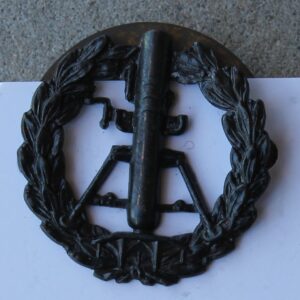
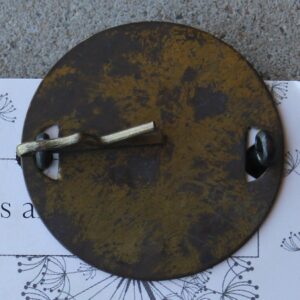
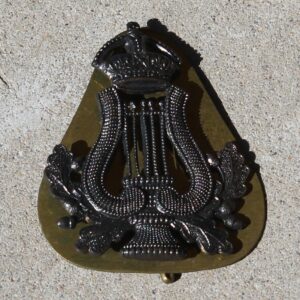
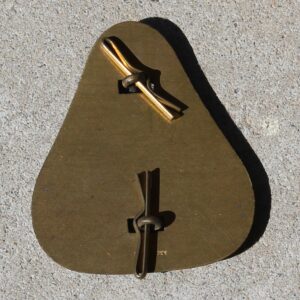
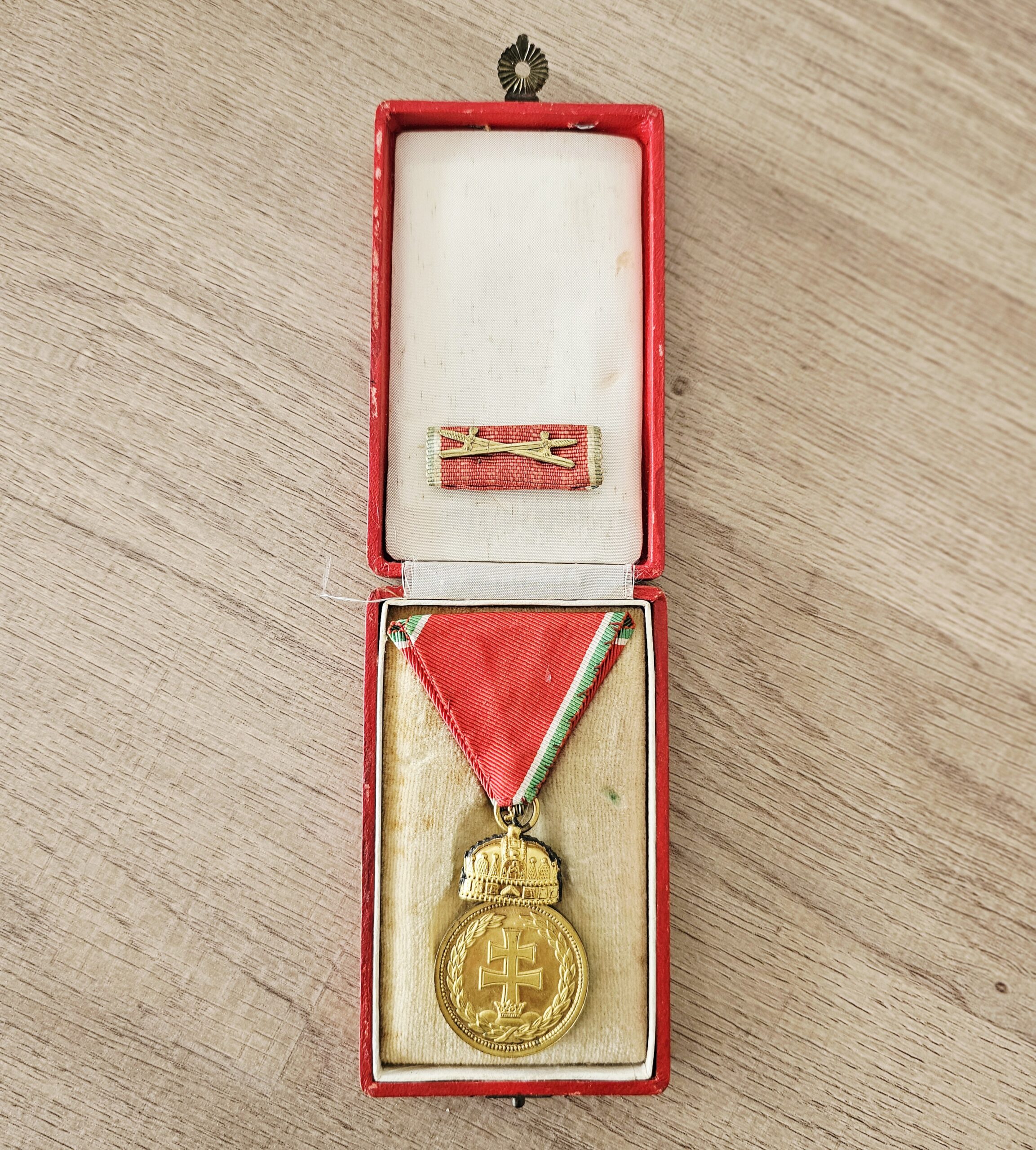
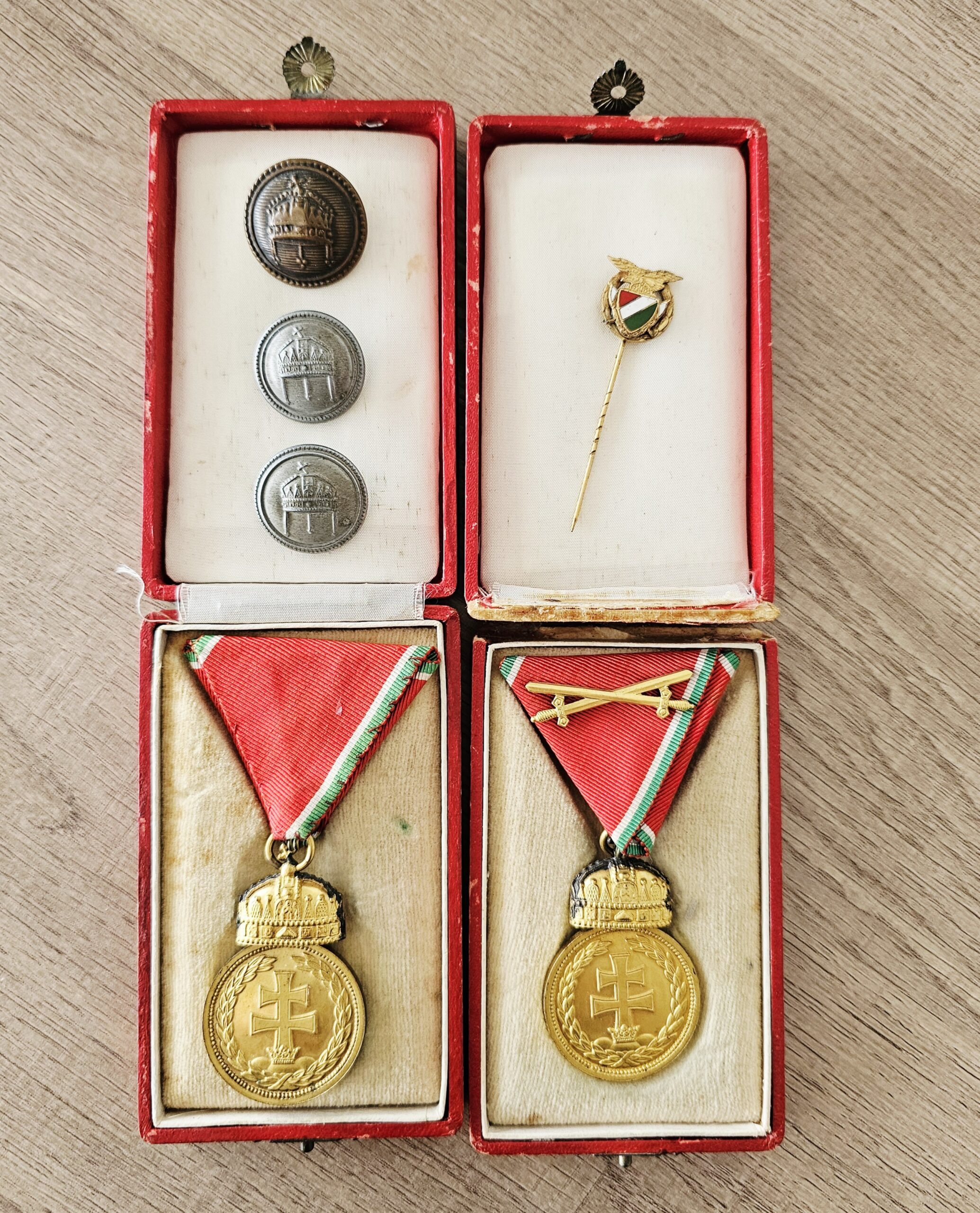
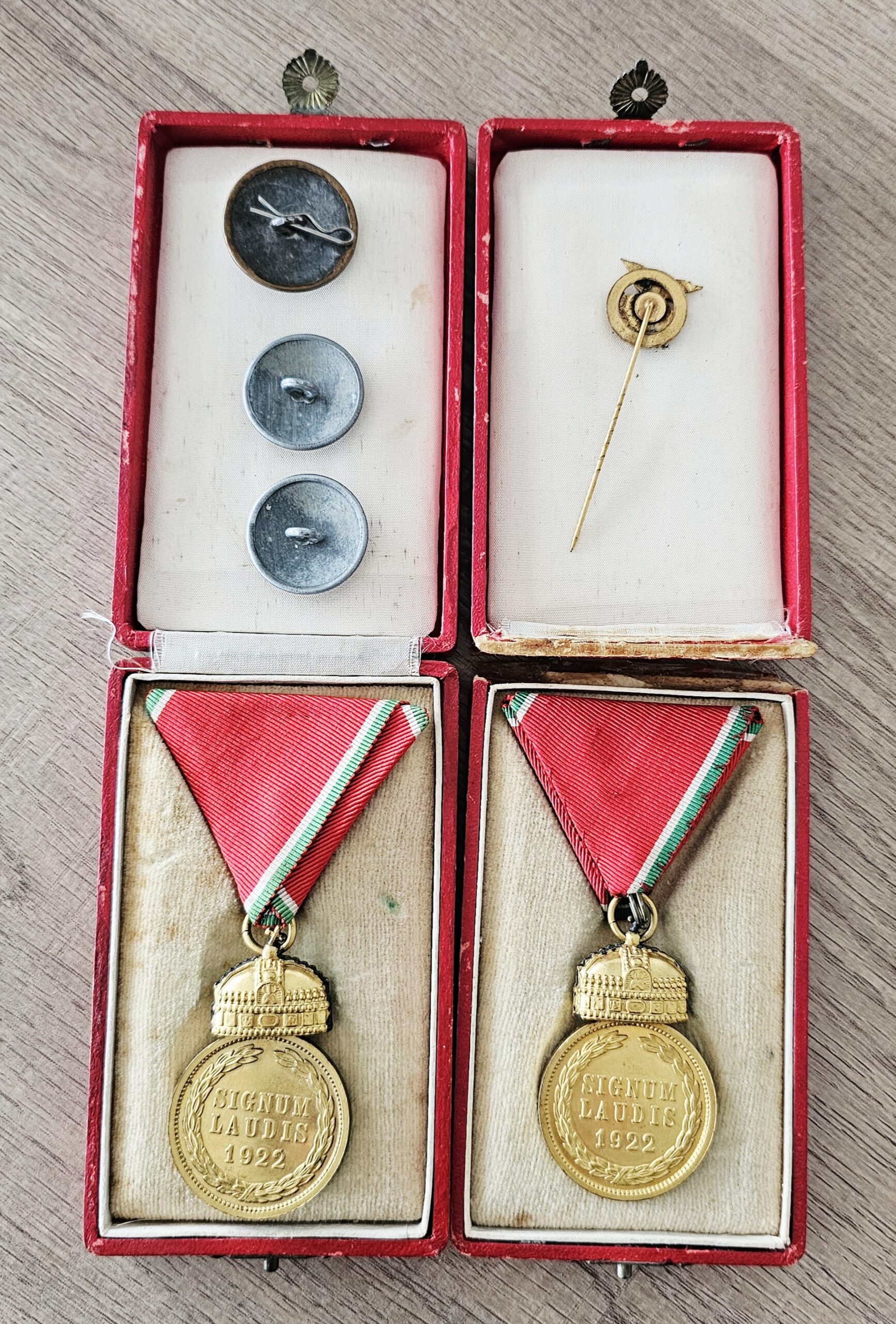
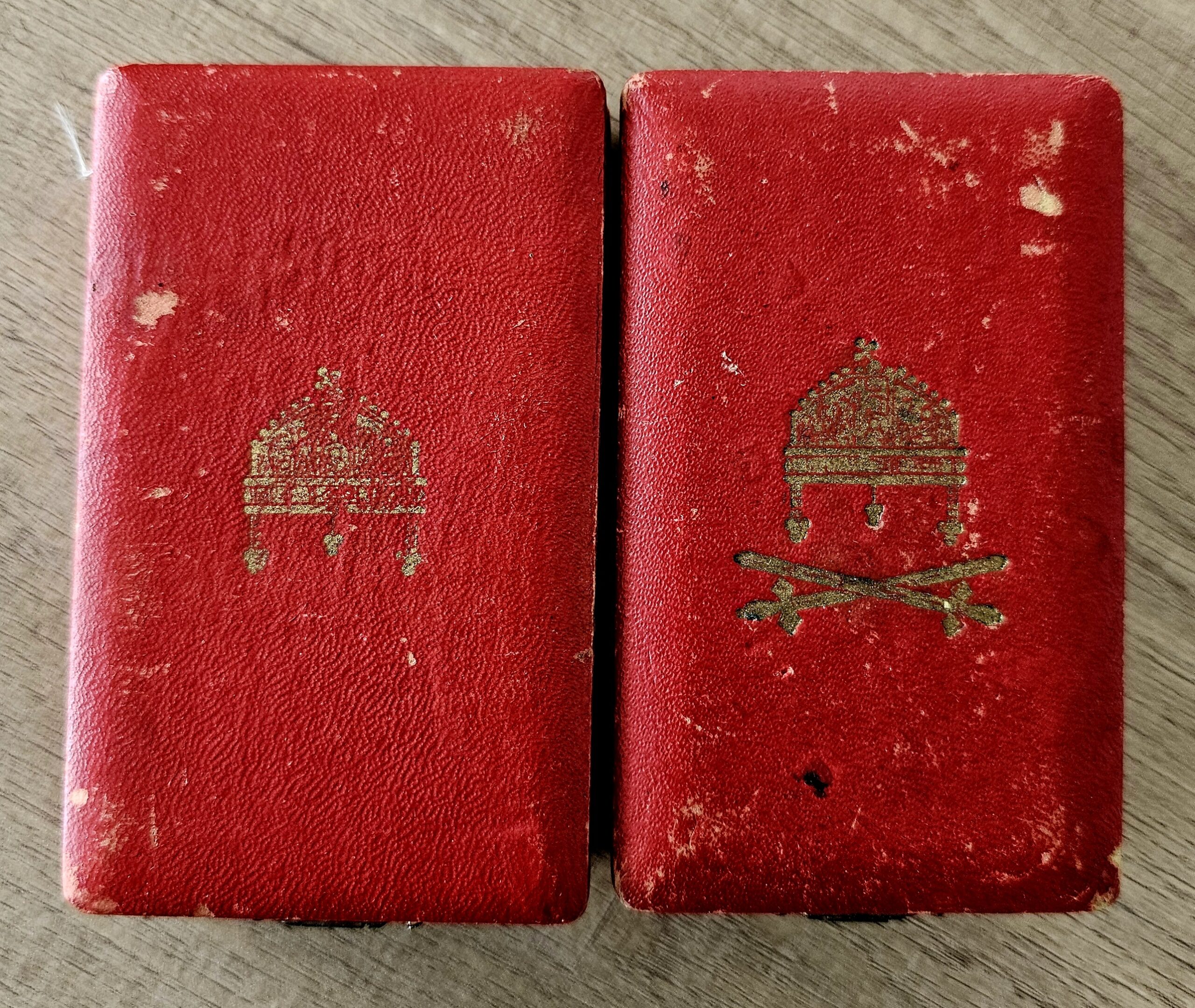
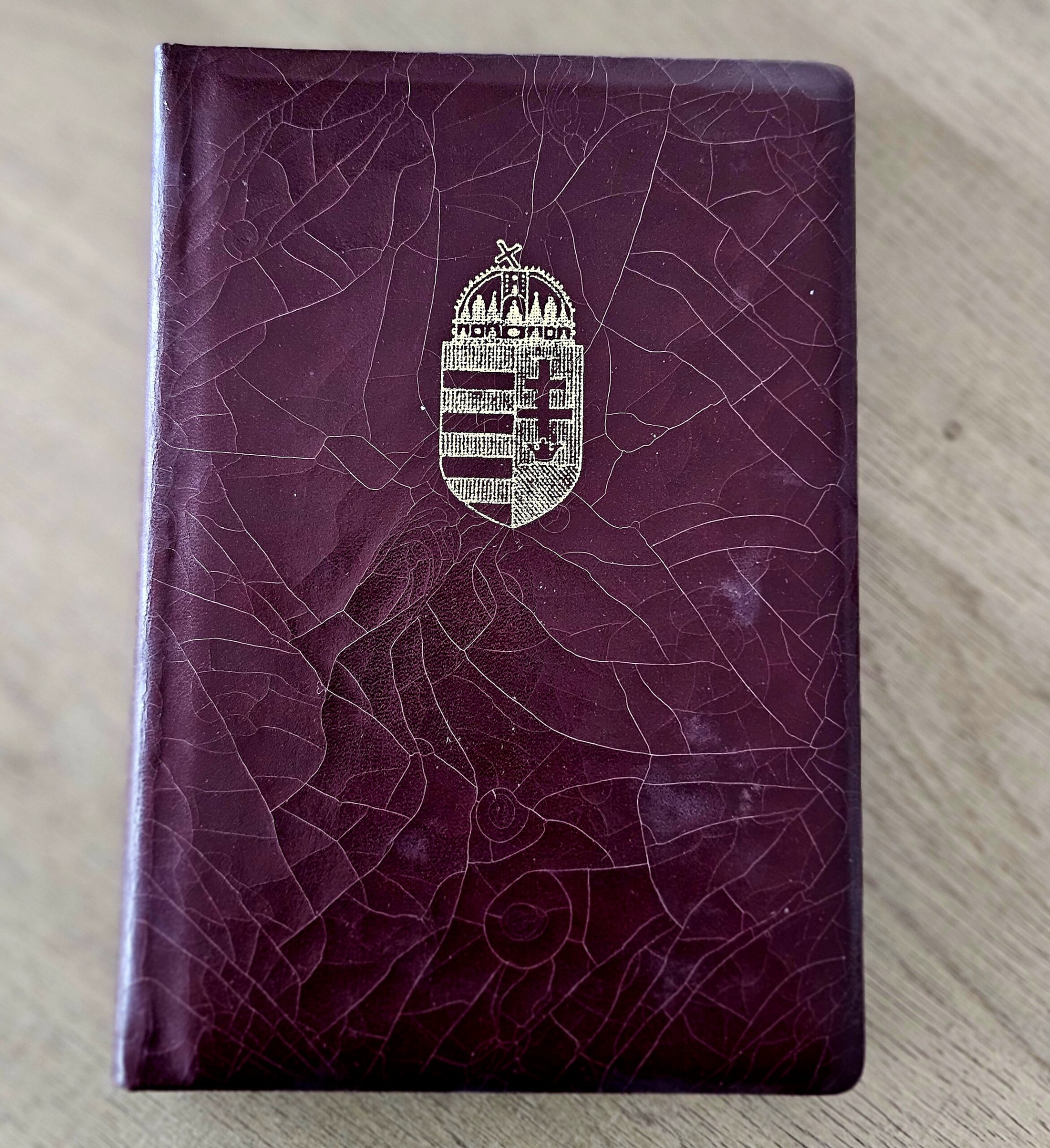
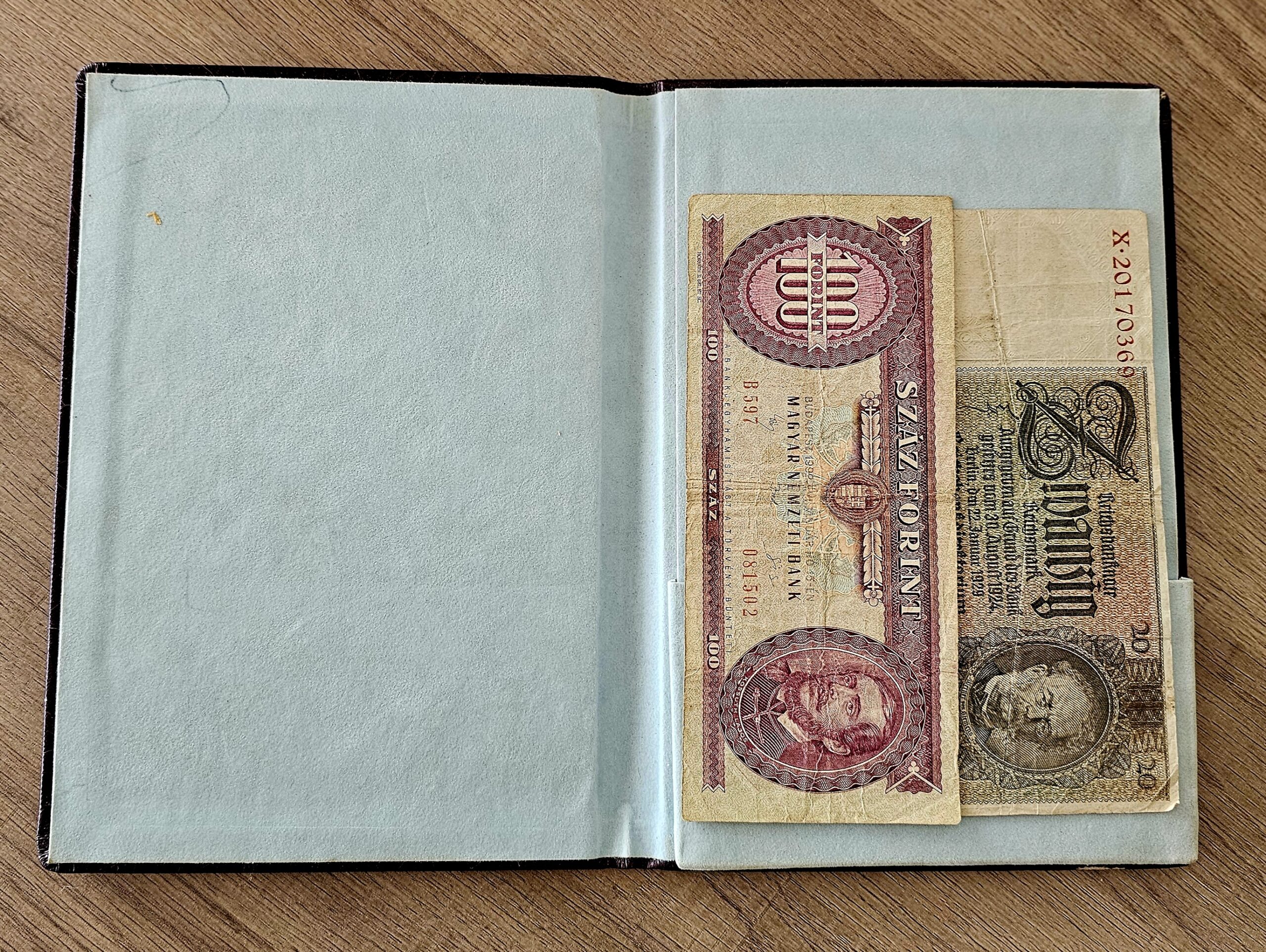
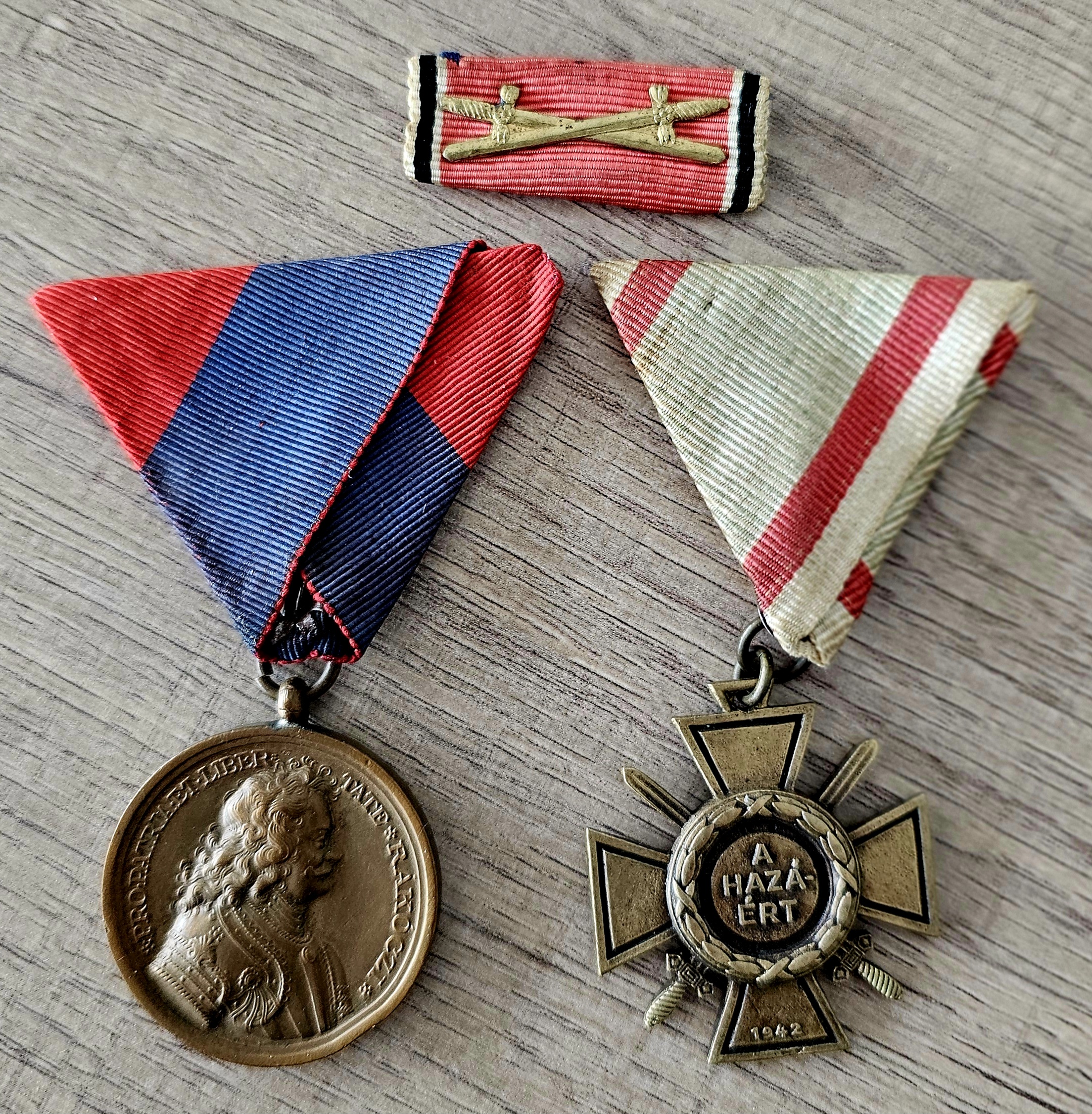
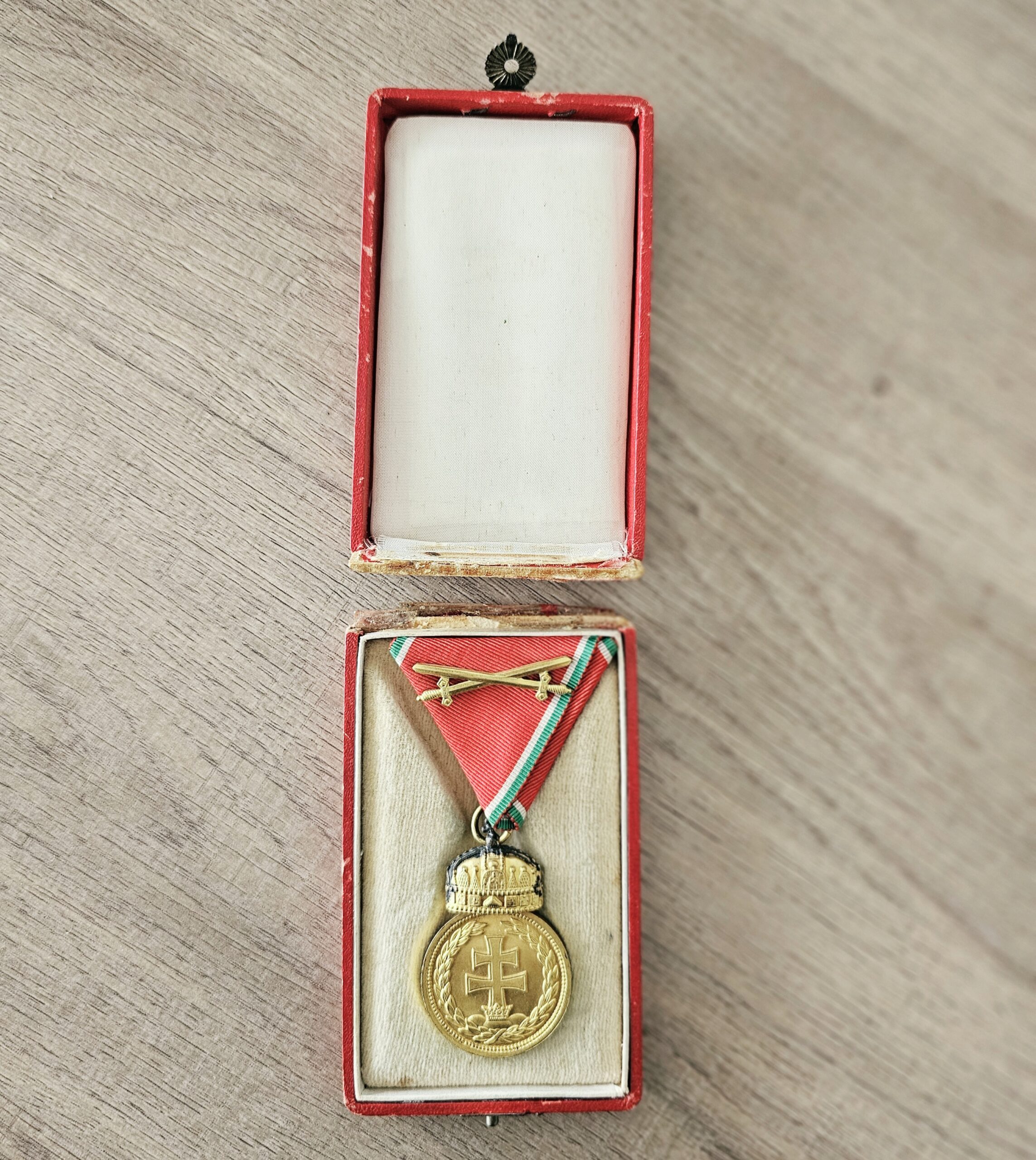
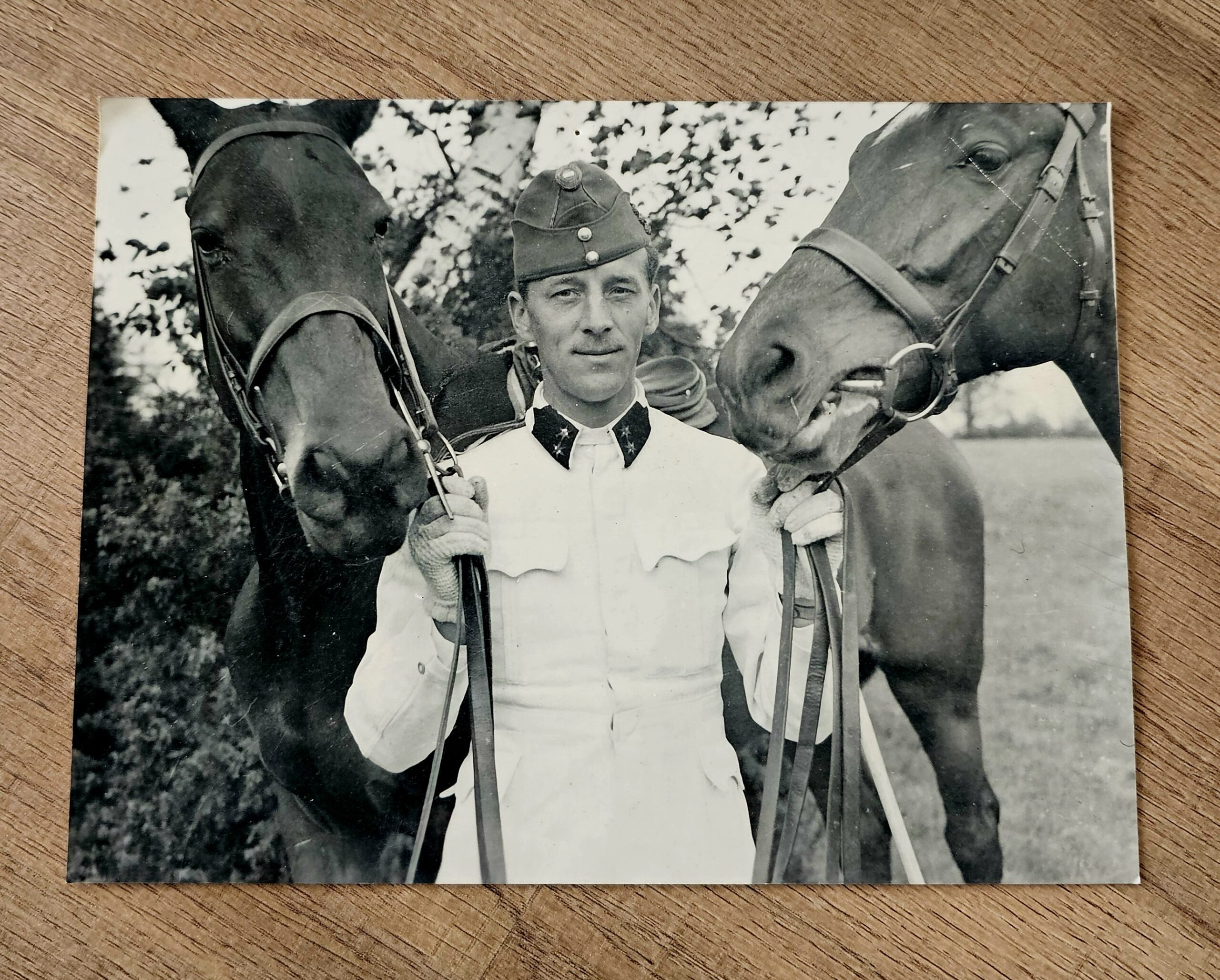
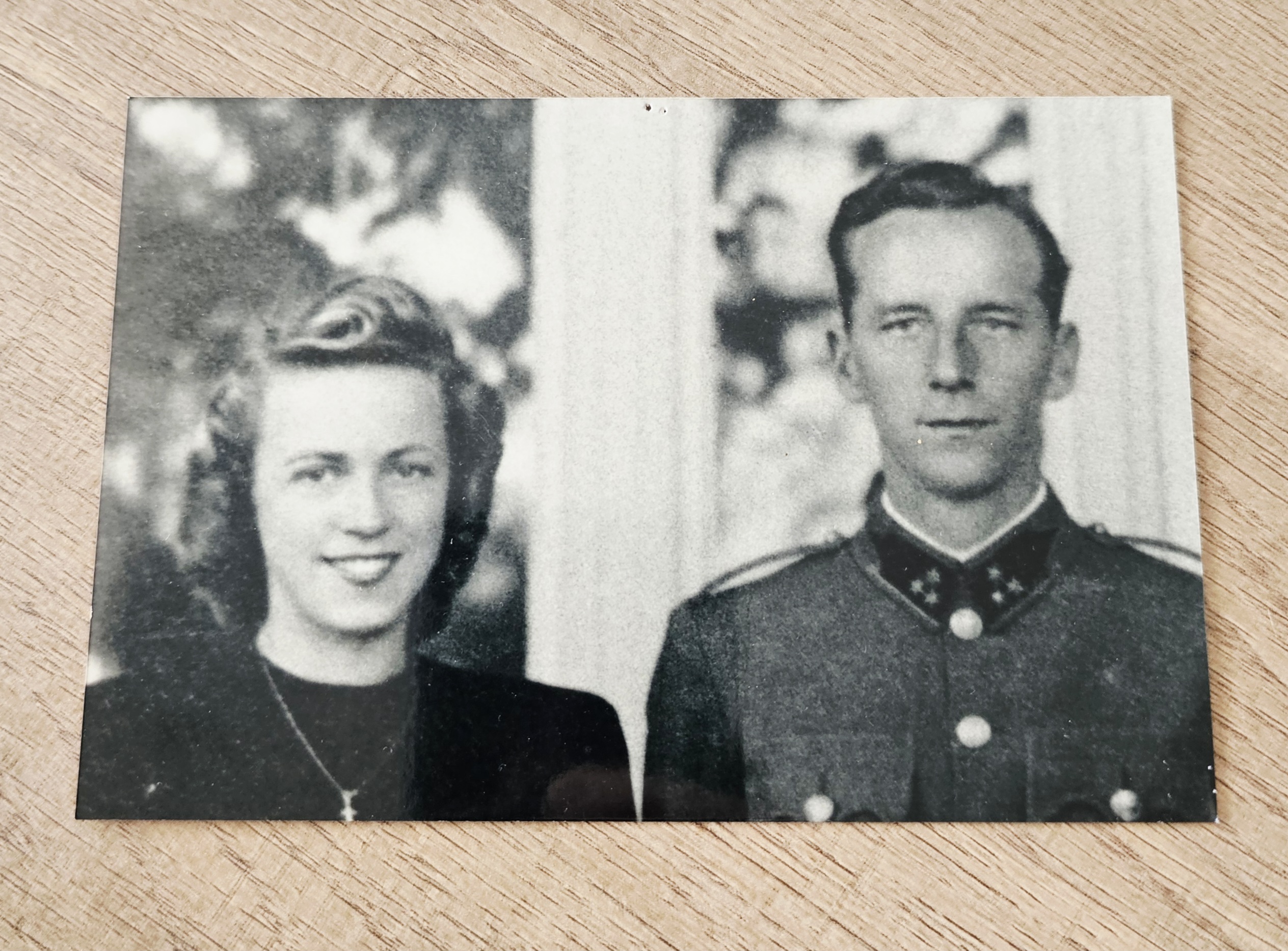
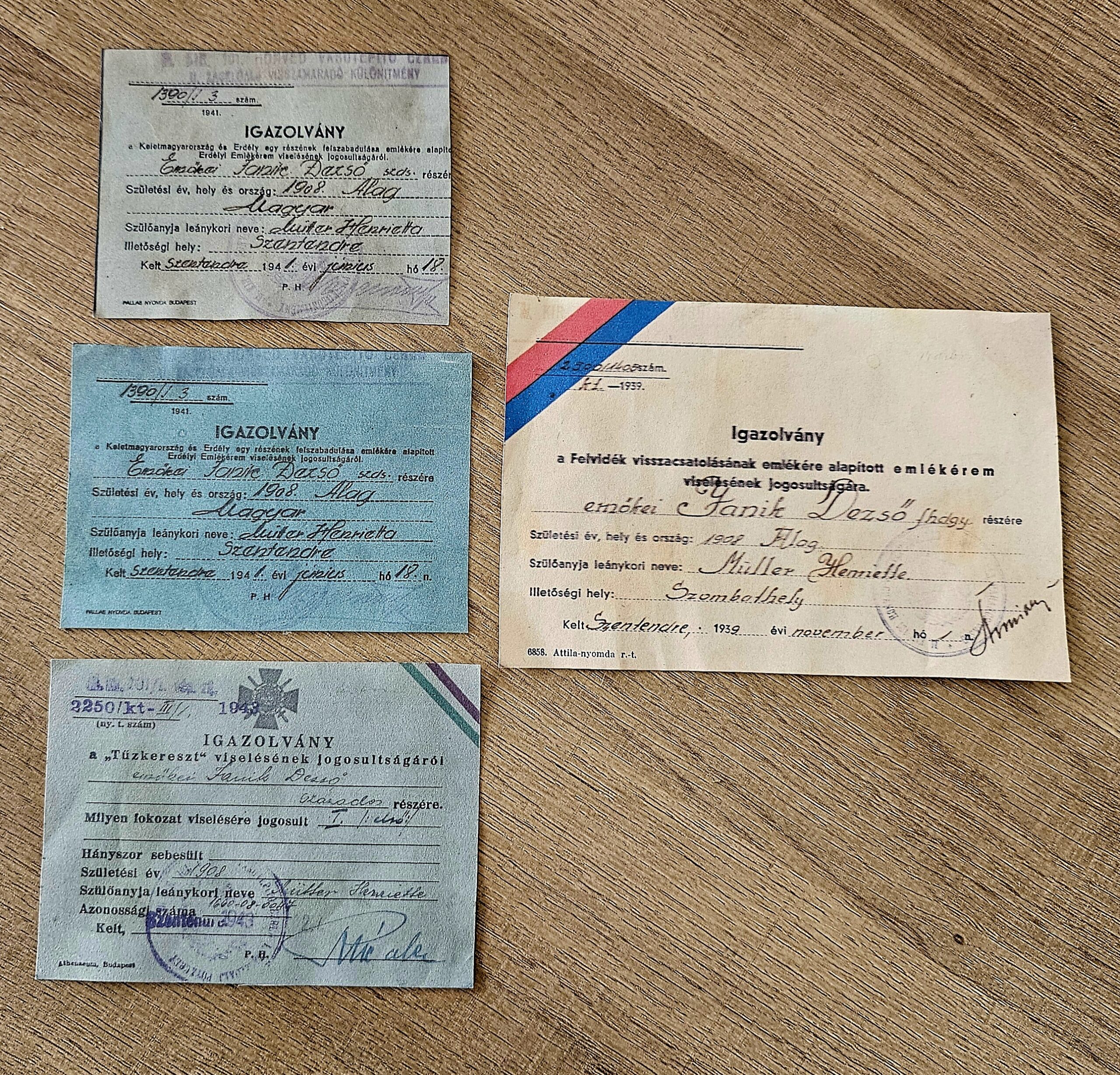
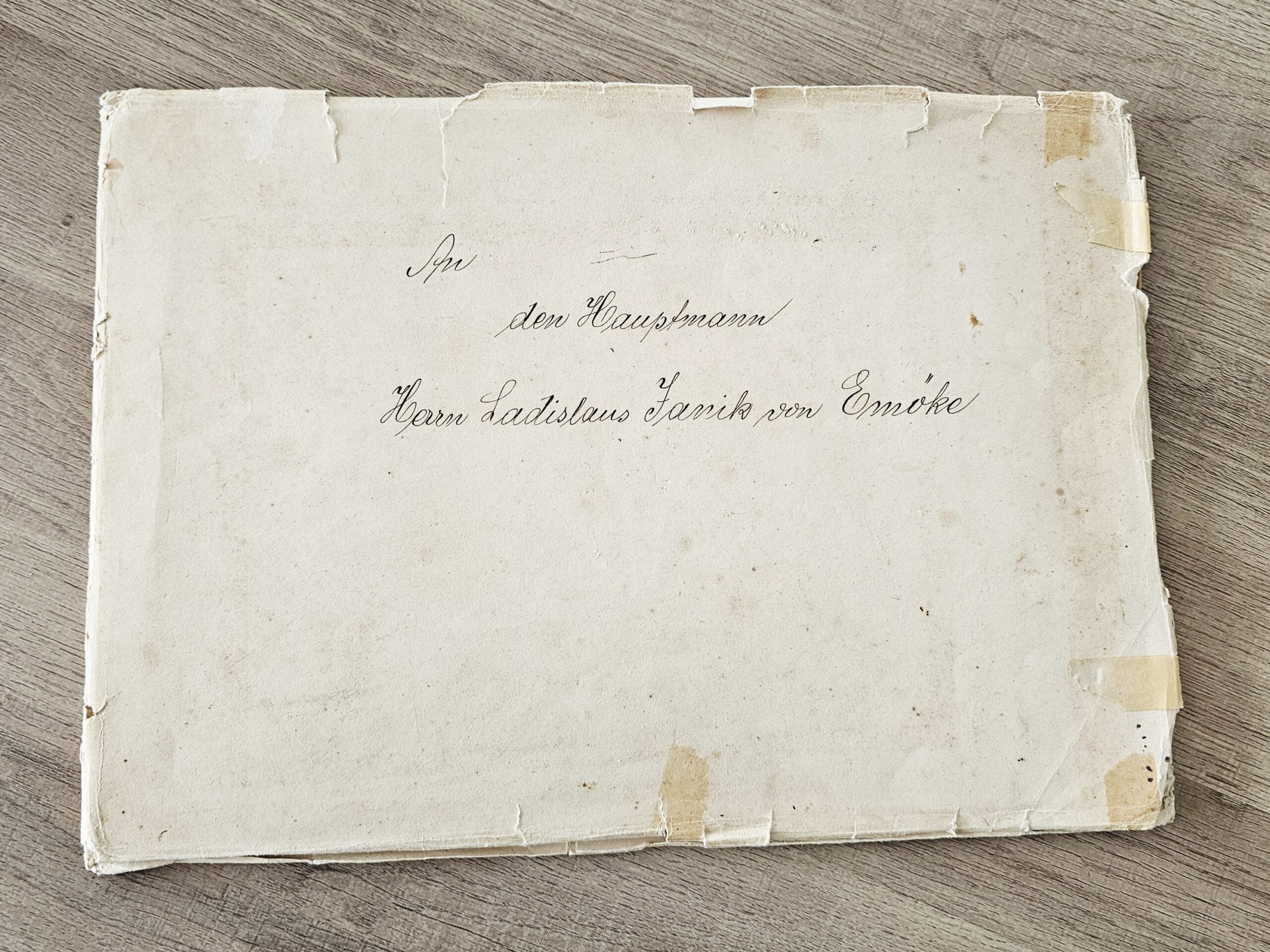
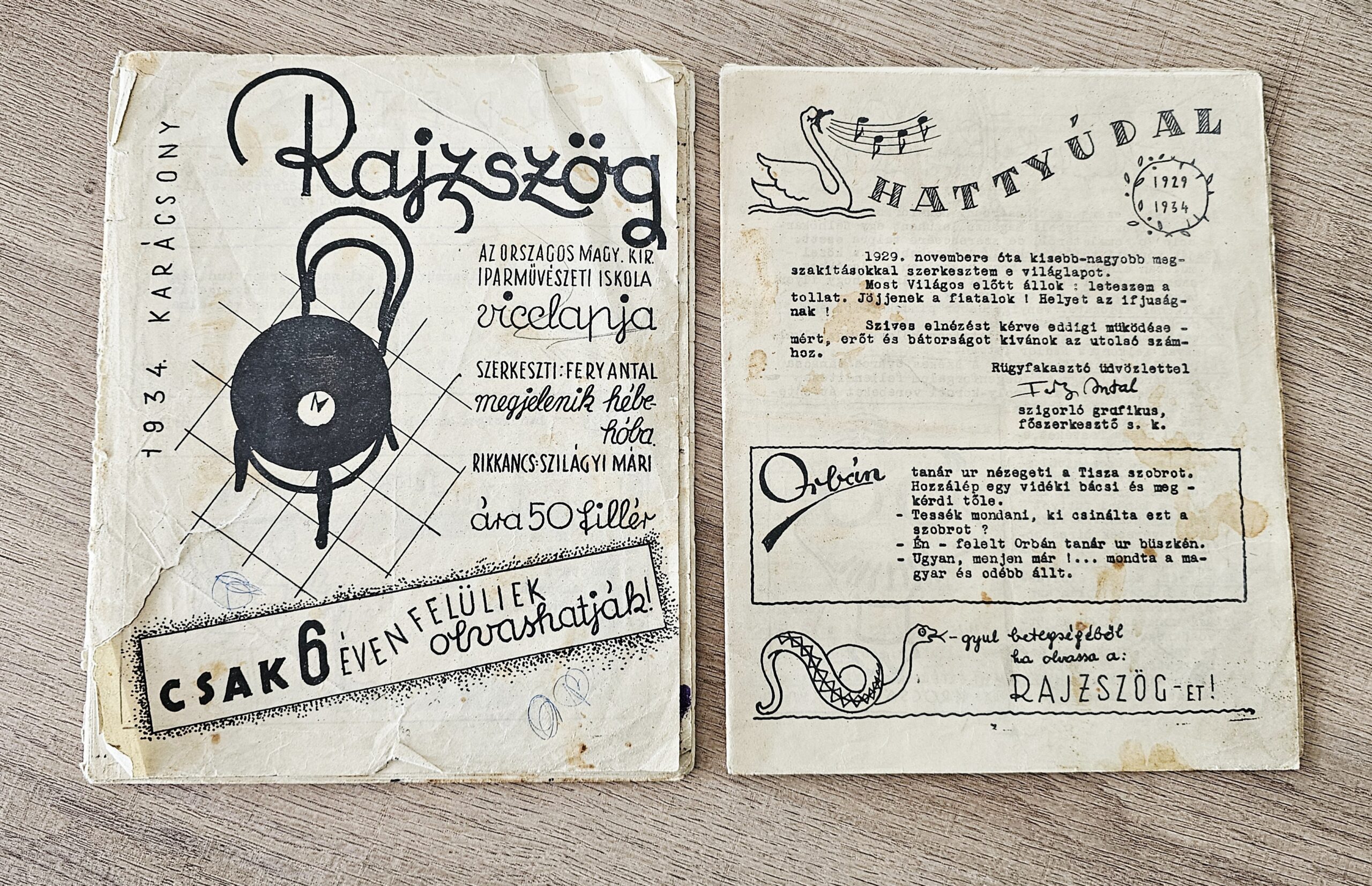
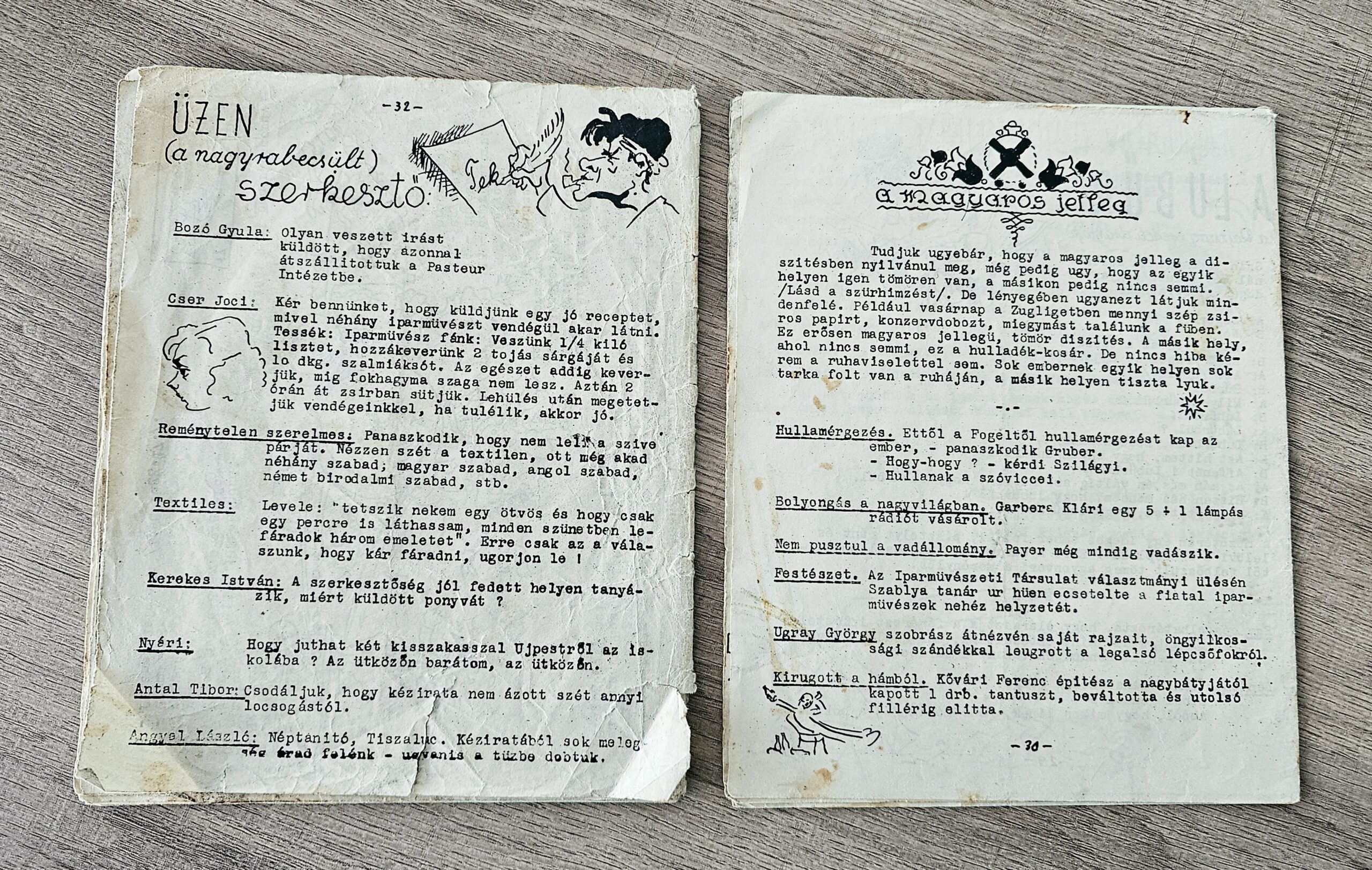
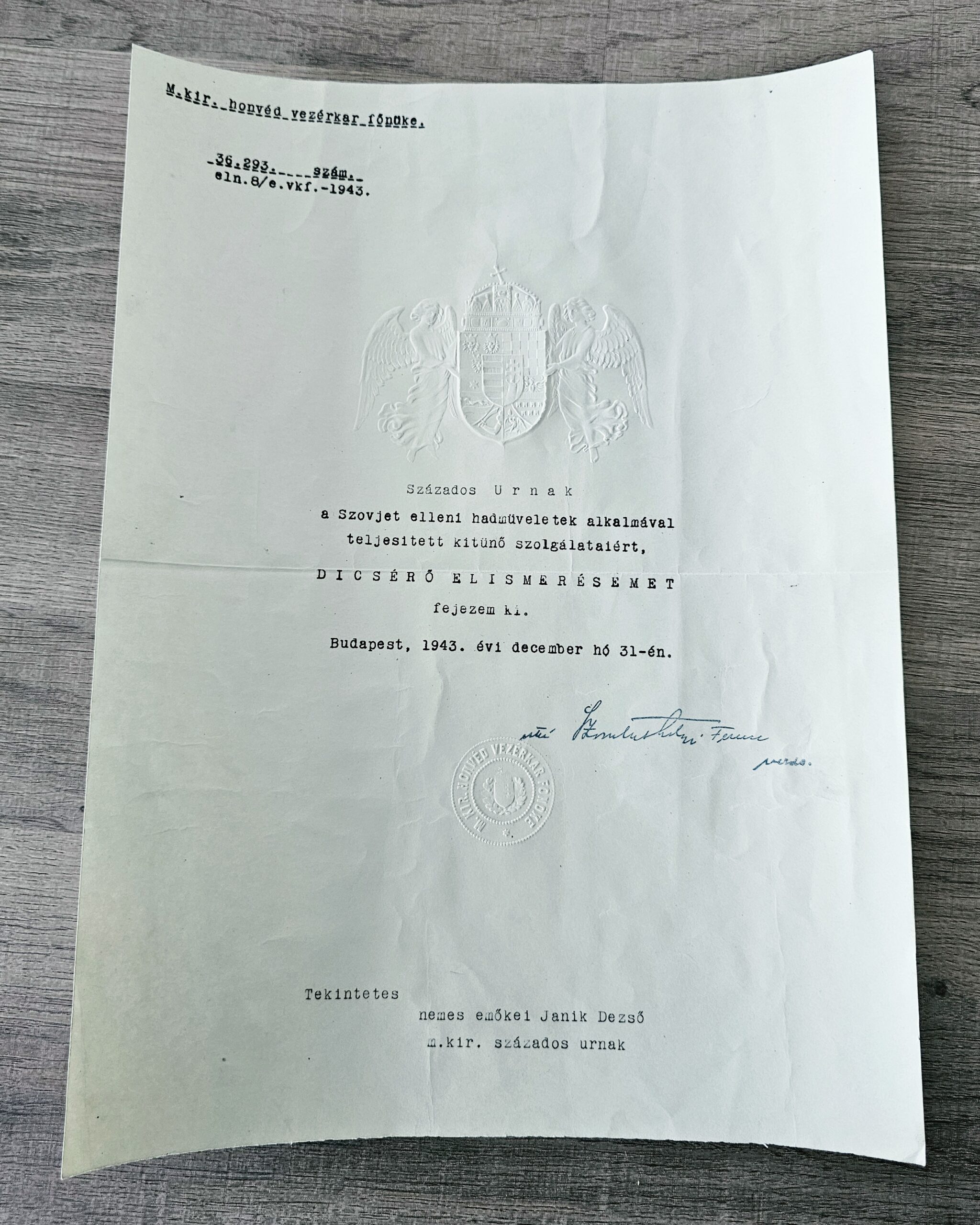
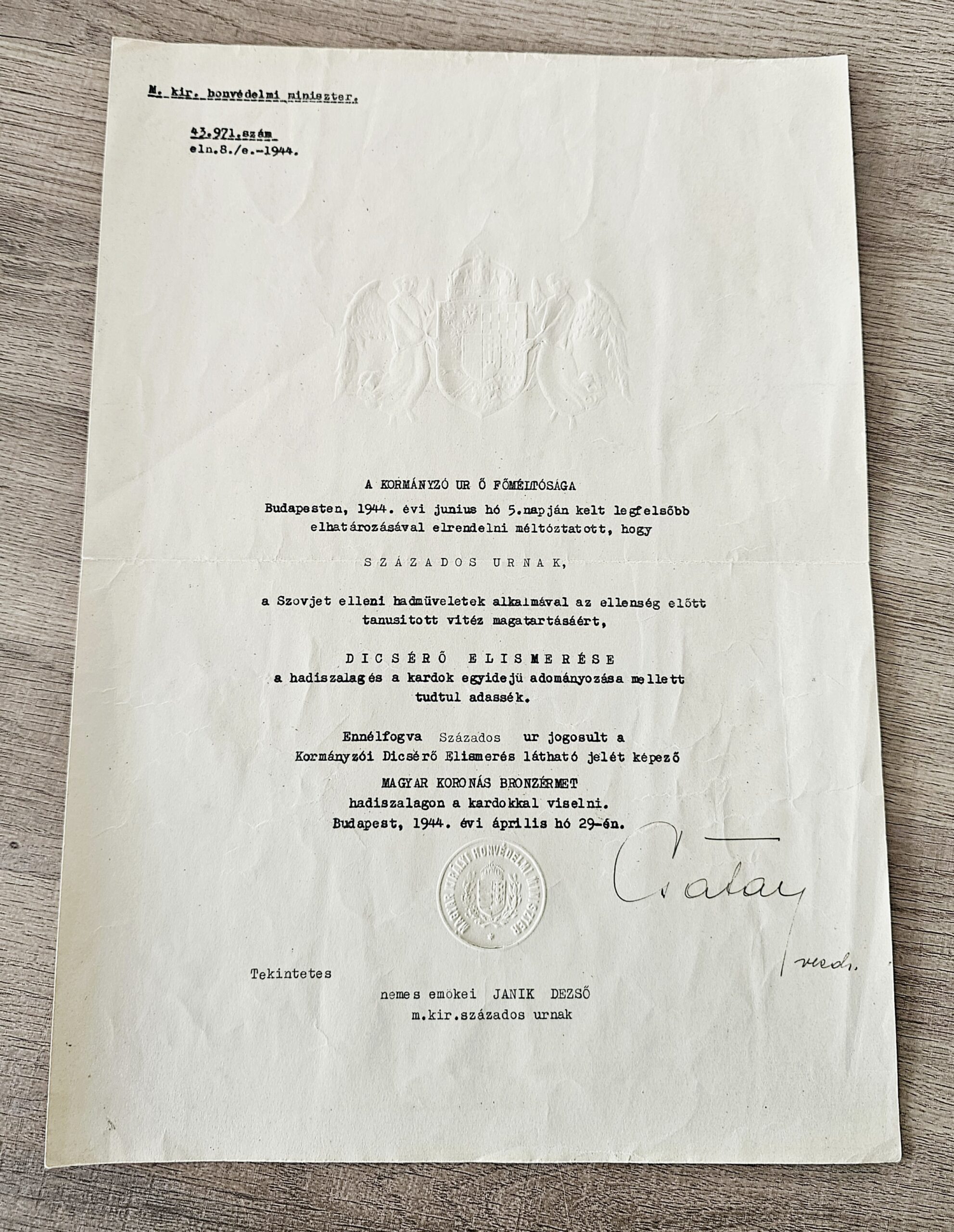
WWII Era Medal Grouping including photographs, paperwork certificates and receipts for medals, uniform buttons & stick pin, photo album, document folder & banknotes, two magazines, medals belonging to Hungarian Captain Ladislaus Janik von Emoke. There are eight merit/participation medals, two ribbon bars and four Hubertus medallions.
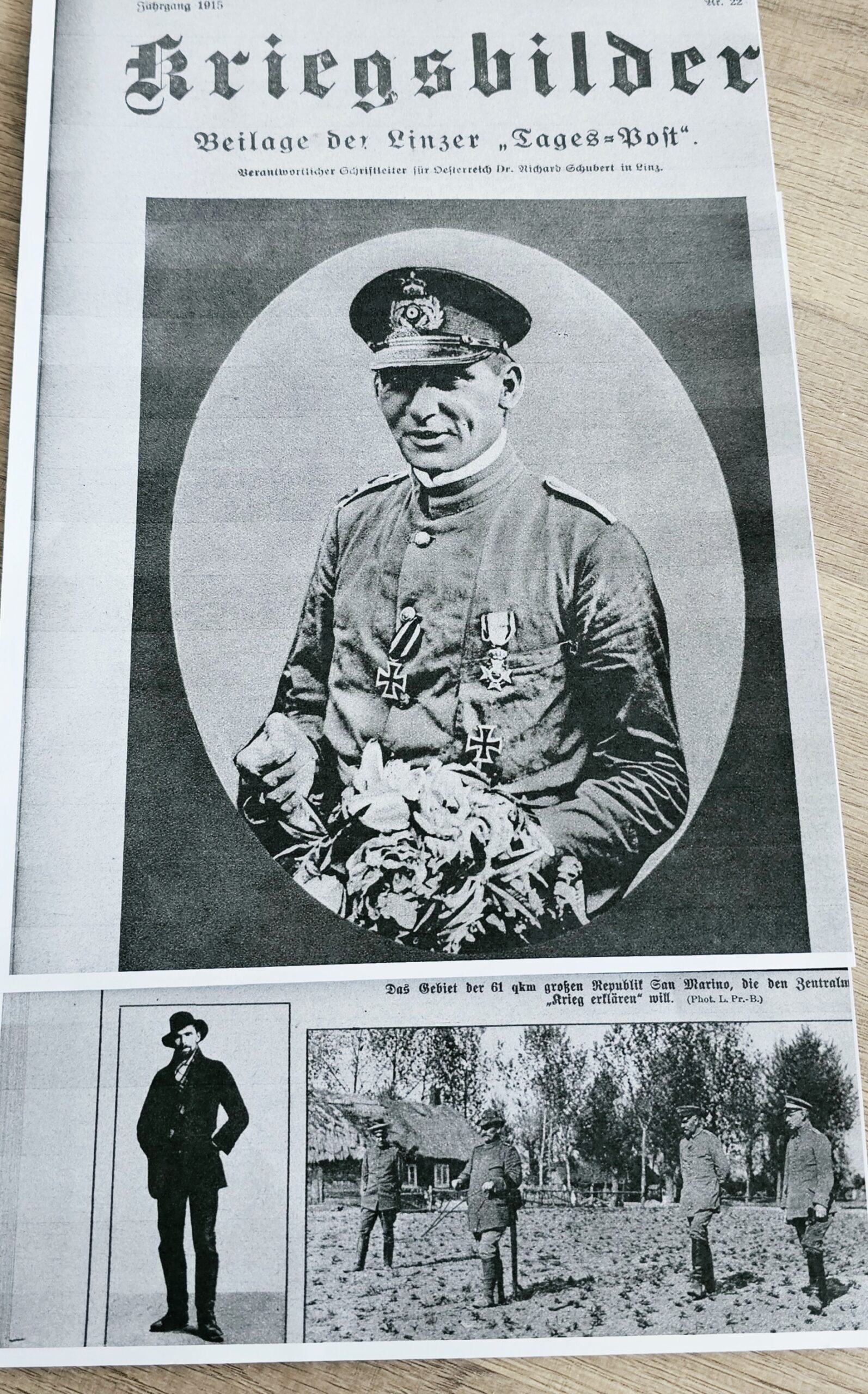
The name Ladislaus Janik von Emoke first appears during WWI. This First Lieutenant in a Hungarian Hussar regiment was a Prisoner of War who escaped from Russian captivity. He famously made headlines in contemporary wartime news – the Kriegsbilder Newspaper Edition 22, 1915 as managing his masterful escape by disguising himself as a local wood merchant. A photograph of him in his disguise features in this particular paper, bottom left hand corner of the image.
Not to be outdone, his son Ladislaus Janik von Emoke born 1908, rose to the rank of Captain in the Hungarian Army – an axis power who fought alongside Germany during WWII.
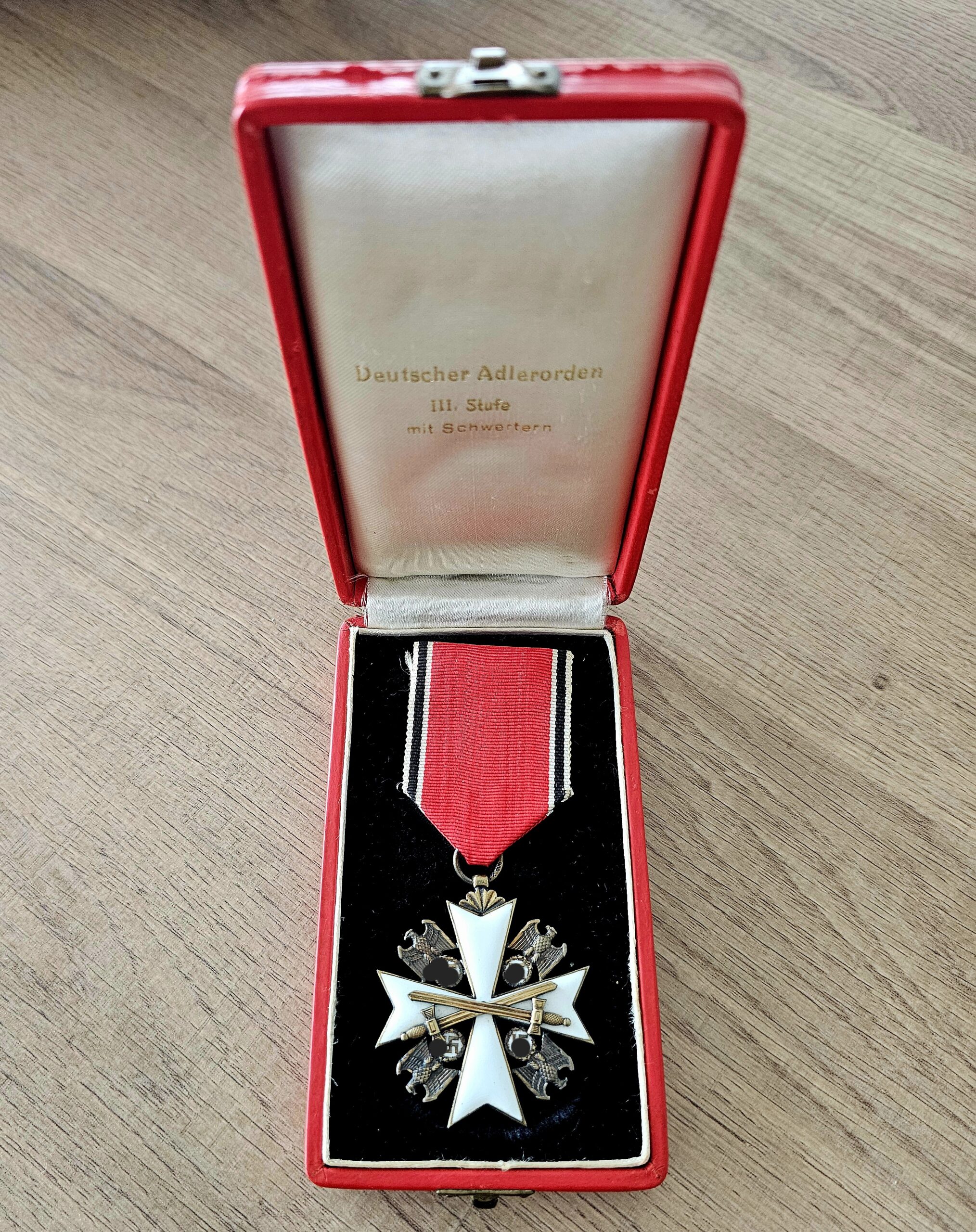
Presented here are some, (but not all – there’s a ribbon bar for Anschluss medal, but not the medal), of Janik von Emoke’s medals of honour, awarded by both Hungary & Germany. He was awarded the Order of the German Eagle Third Class crossed swords for ongoing military service to Germany from 1938 – 1943, including a possible leadership role in Operation Hubertus – the Battle for Stalingrad. If von Emoke’s military records were obtained from the archives in Budapest, Hungary, it would confirm or deny this theory.
Medals included:
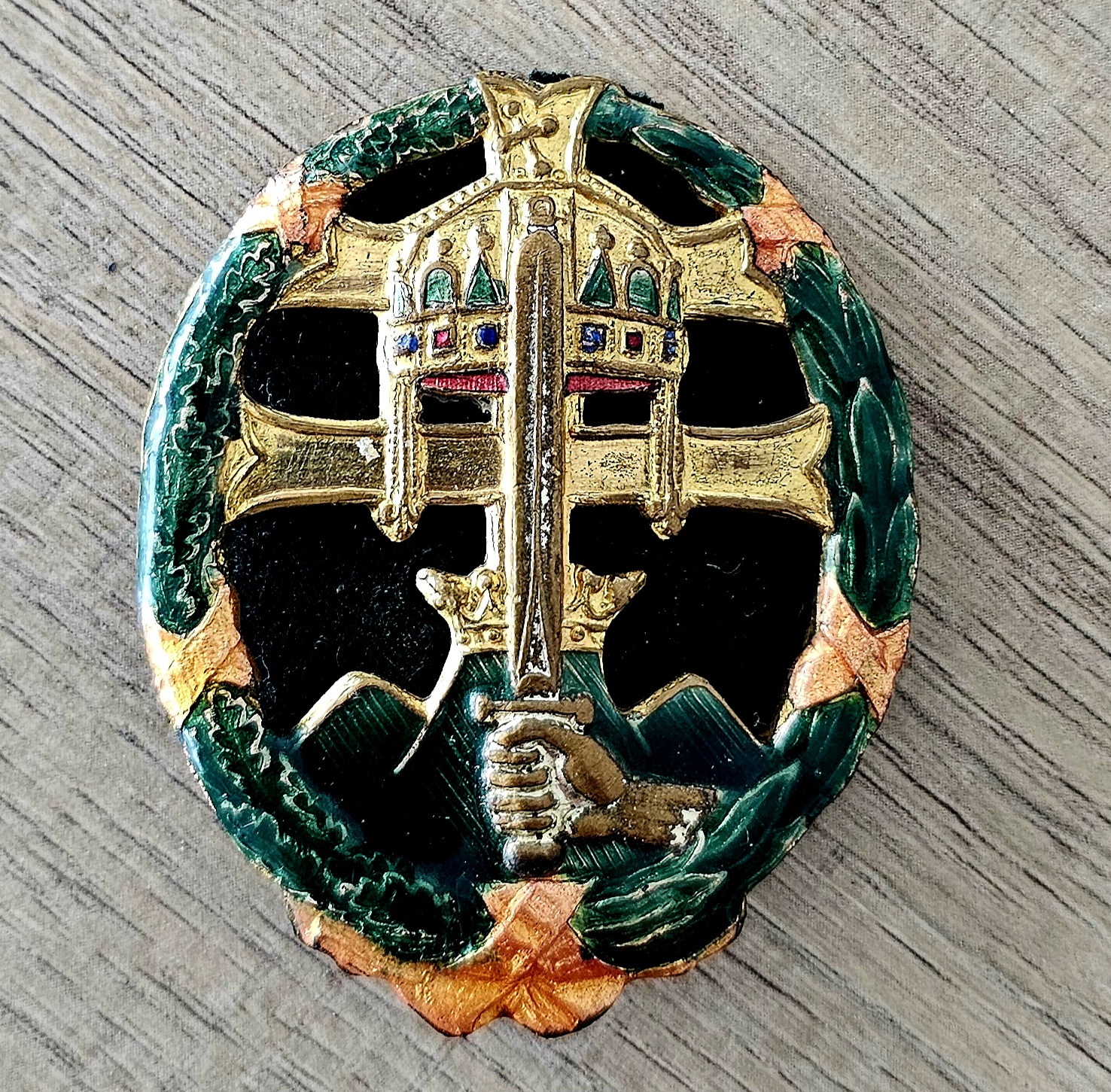
Hungarian Officer’s Combat Leadership Badge 1920-1944. The Hungarian Officer “Csapattiszti Jelveny” (Combat Leadership) award was instituted in early 1922.
Dr. János Szentváry-Lukács stated that the Official Hungarian Gazette posted information with regulations on the award in 1922 and 1927. Also that photographs of the badge were illustrated in the Hungarian Gazette in 1928, 1935 and 1939.
The Leadership Combat Badge was issued to those officers that served directly in the Front-Line with his troops. The recipient must have served in troop strength of a regiment size or below and had served in either of the following military branches: Infantry, Calvary, Artillery, Armor, Engineering and Regimental Command.
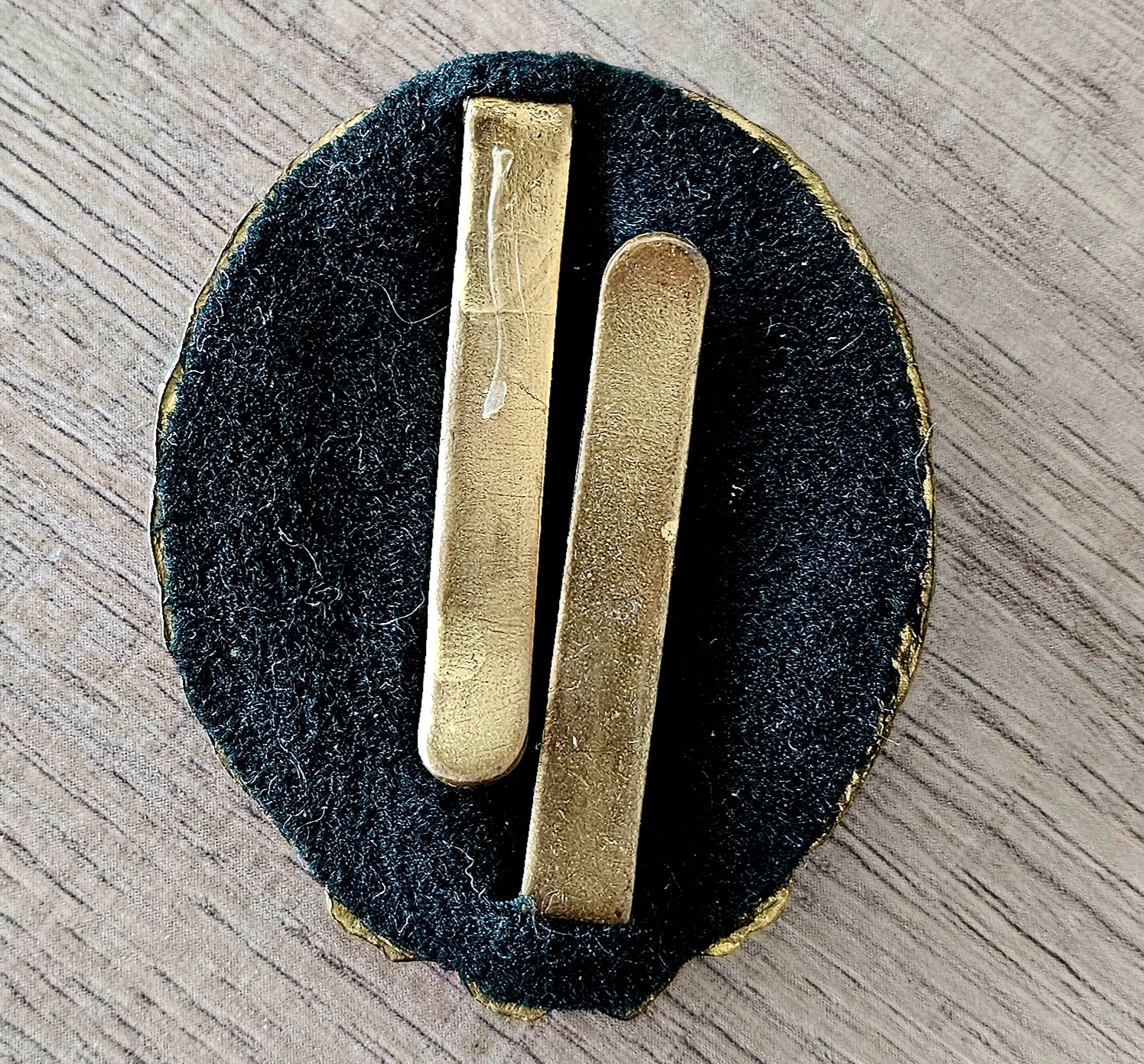
The badge is surrounded with a green wreath and hills the rest is gilt. The centre shows a hand holding a sword with the Hungarian Coat-of-arms in the background. The reverse shows two long wide flat metal prongs. Awarded for the completion of certain combat training courses and for sound leadership in battle.
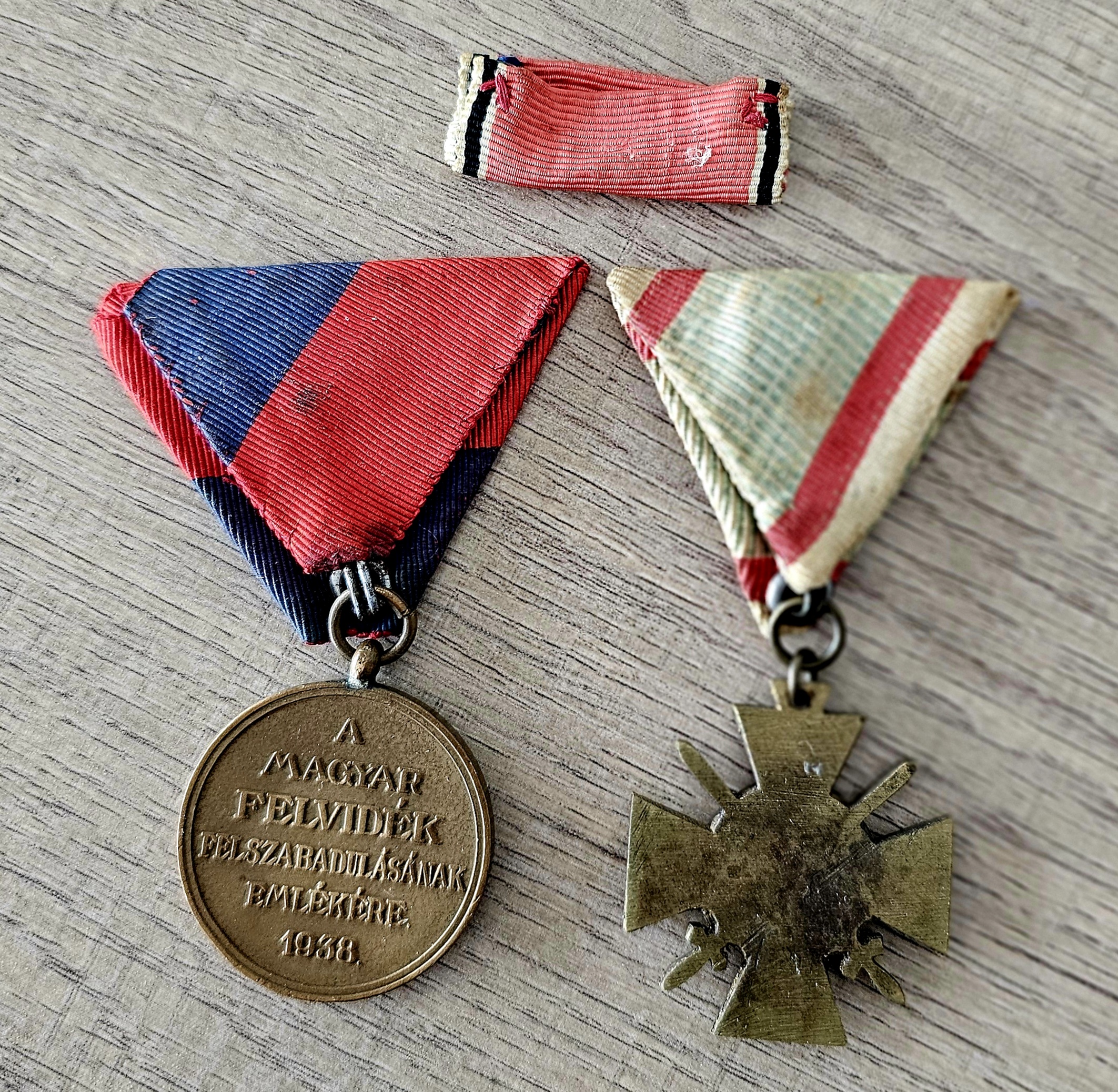
Commemorative Medal for the Liberation of Upper Hungary (Felvidéki Emlékérem) was a military and gendarmerie award instituted on November 4, 1938. It was established by Regent Miklós Horthy to commemorate the return of Slovakian and Carpatho-Ruthenian territories annexed to Hungary following the Munich Agreement and the First Vienna Award.
Hungarian Fire Cross (Tűzkereszt) was a military decoration of the Kingdom of Hungary instituted on November 24, 1941, during World War II. It recognized frontline and military service. 1st Class: Awarded with swords and a laurel wreath for at least three months of frontline combat duty.
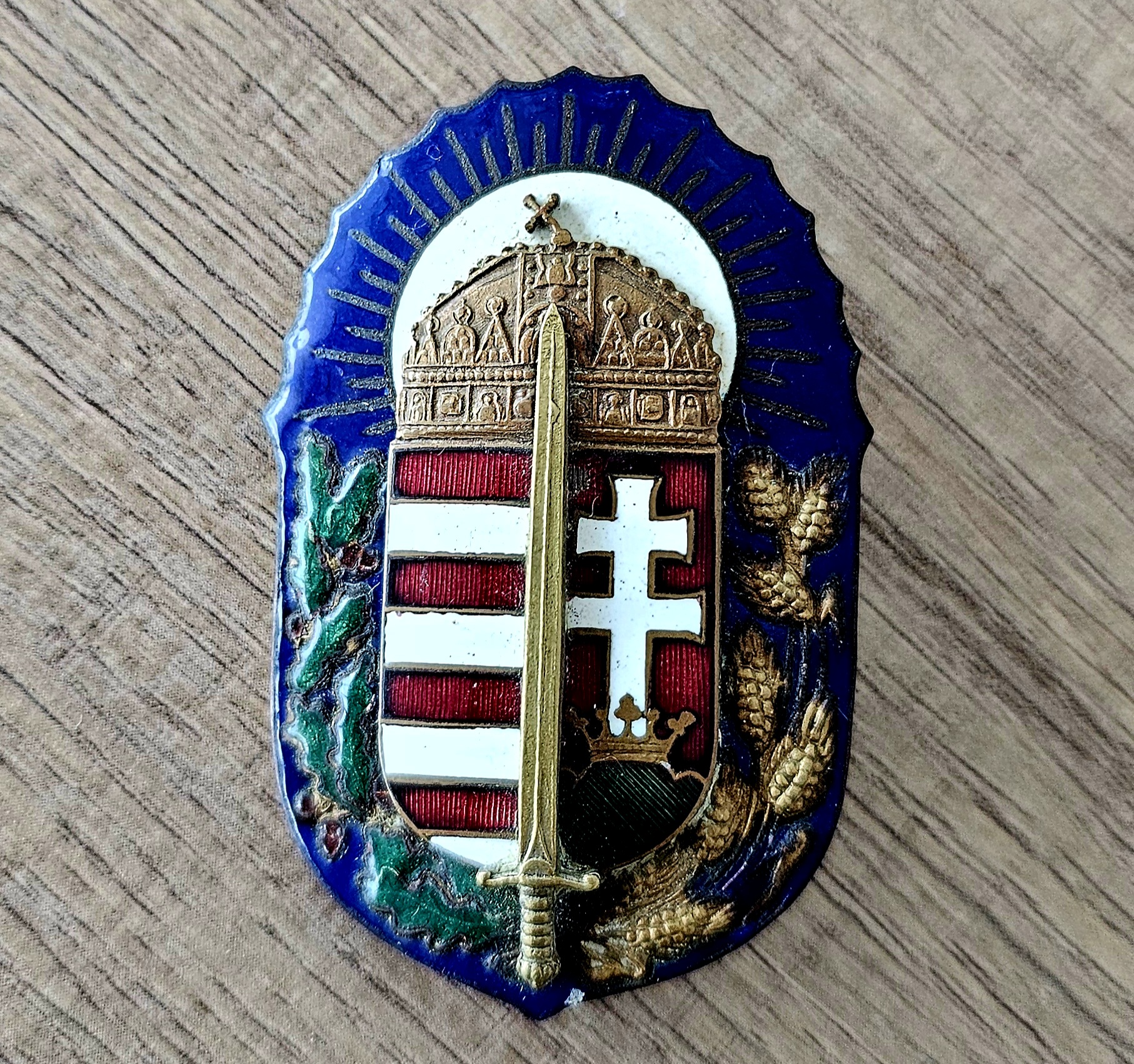
Order of Vitéz (Hungarian: Vitézi Rend; frequently spelled in English as ‘Vitez’) is a Hungarian Order of Merit, which was founded in 1920. It was awarded as a state honour from 1920 to 1944.
During World War II, many members of the Hungarian government and military were members of the Order. The United States department of State lists the Order of Vitéz as having been under the direction of the NSDAP Governmentof Germany, like the Arrow Cross Party and French Police at the time.
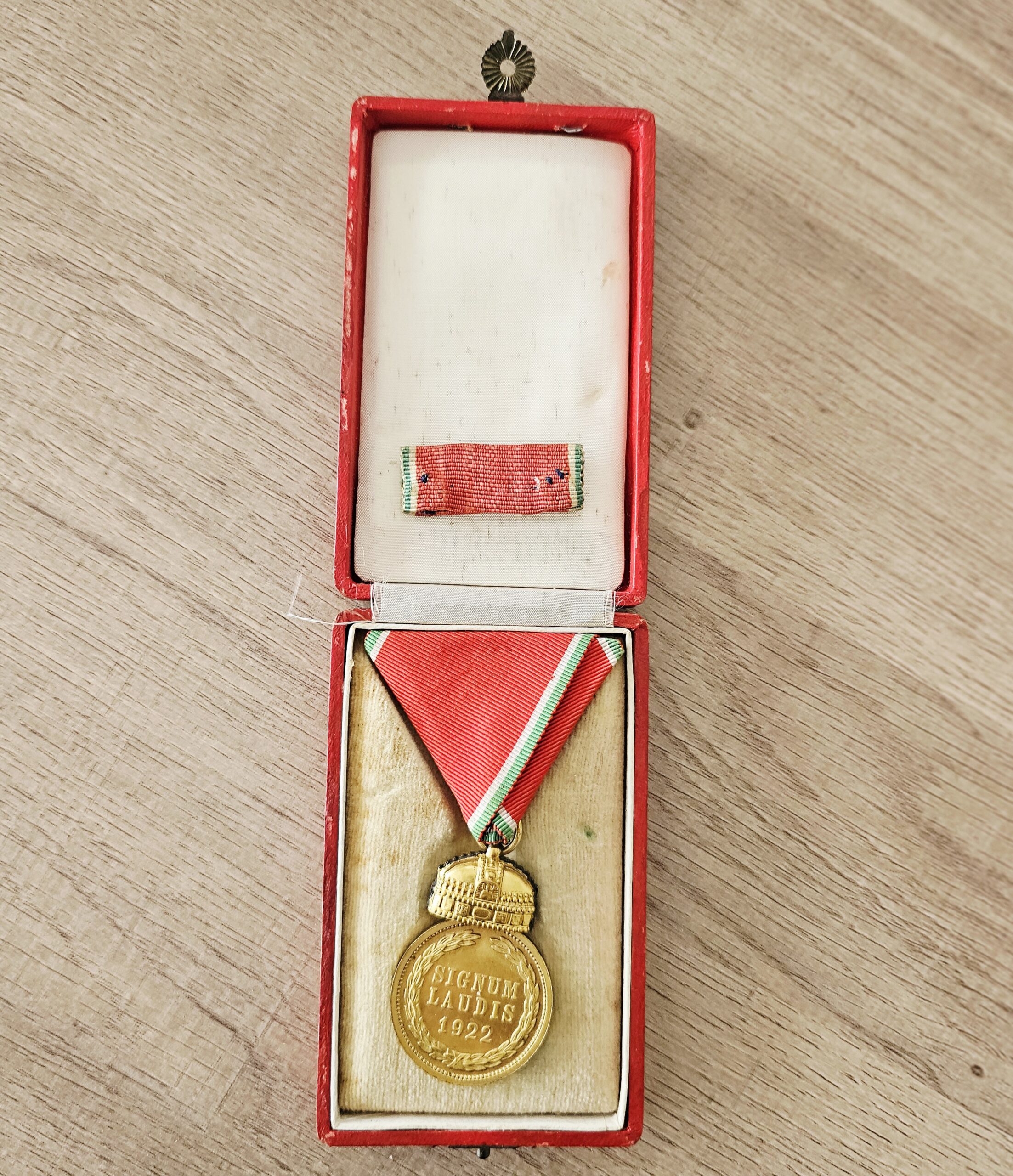
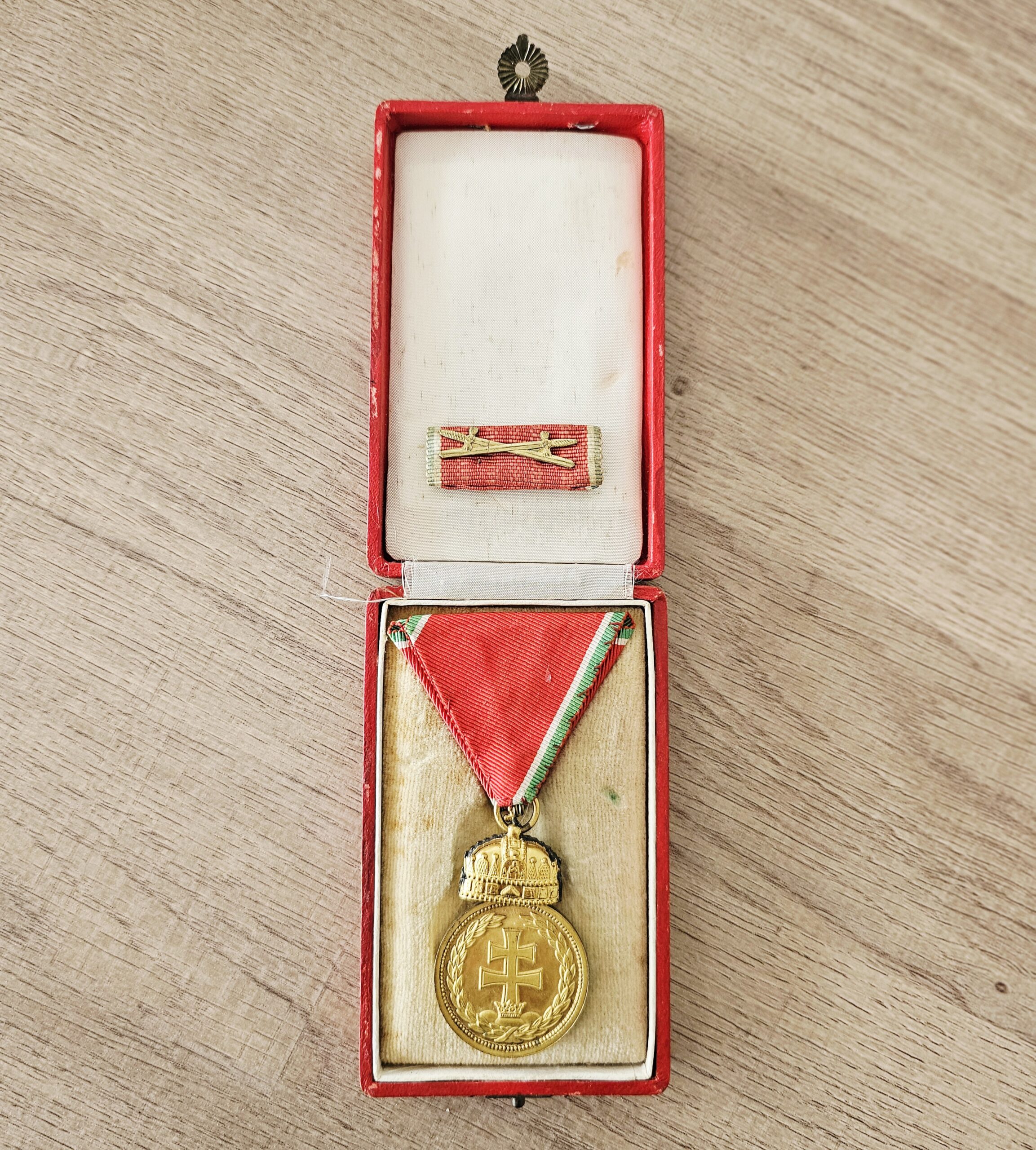
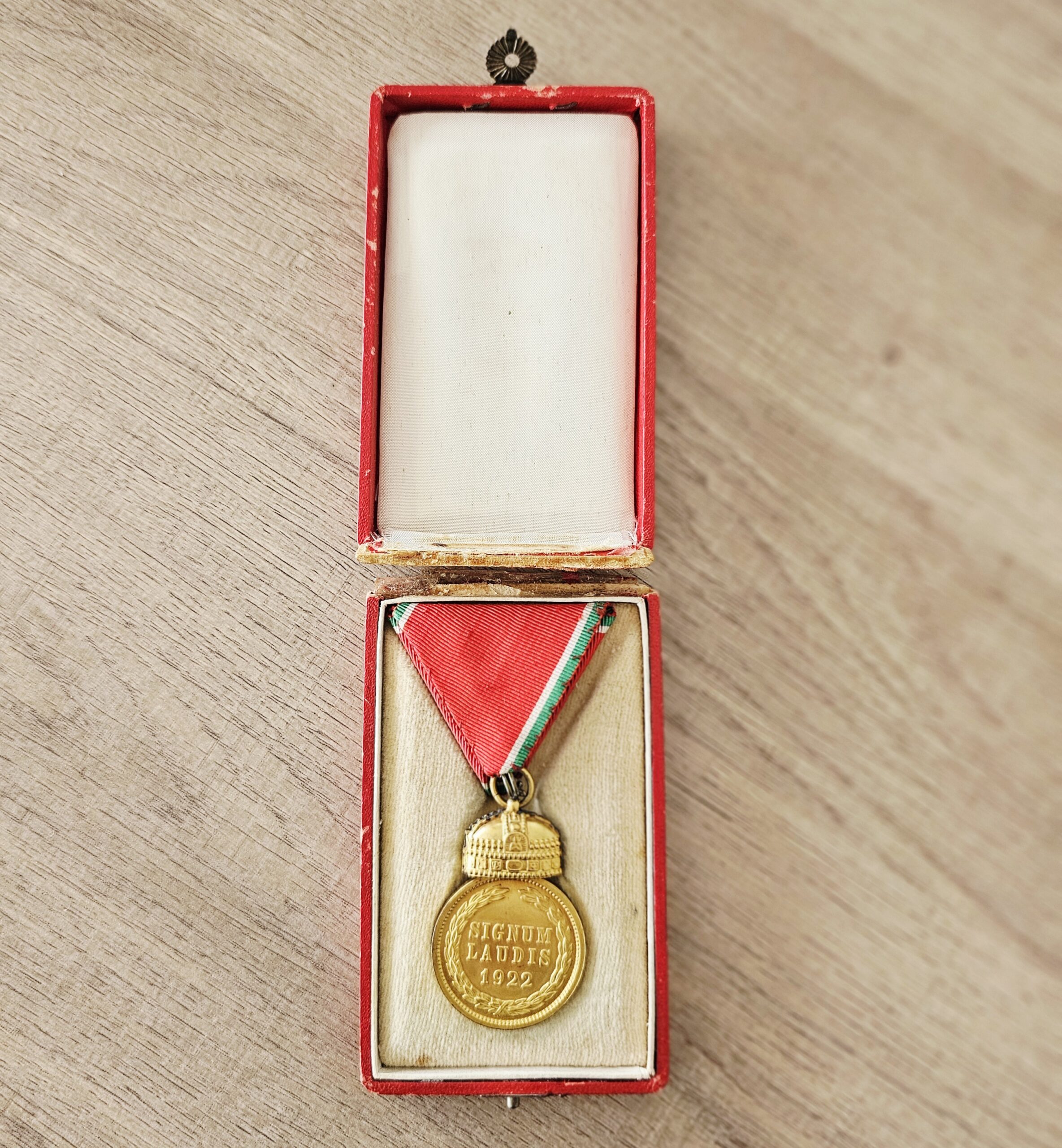
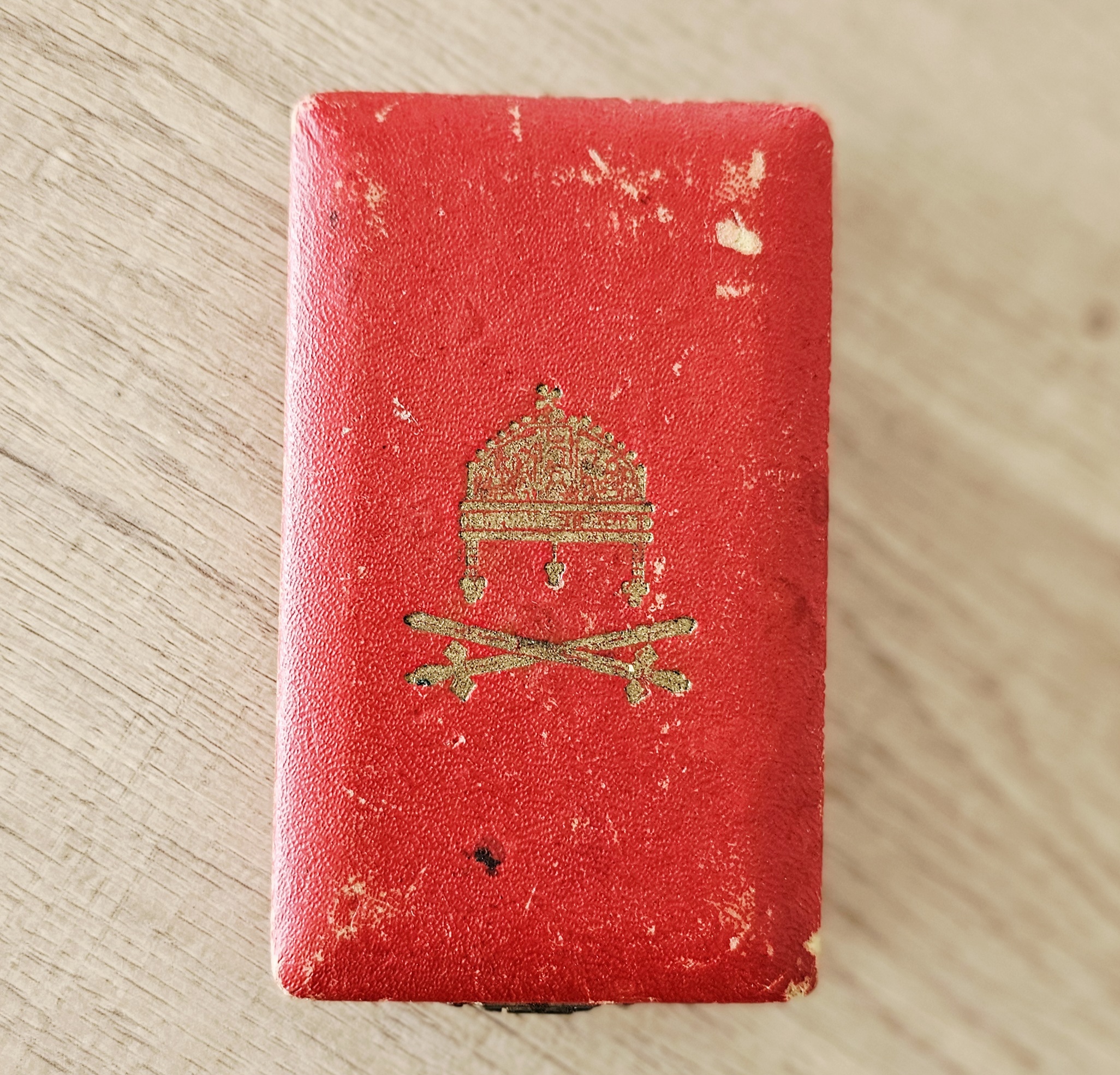
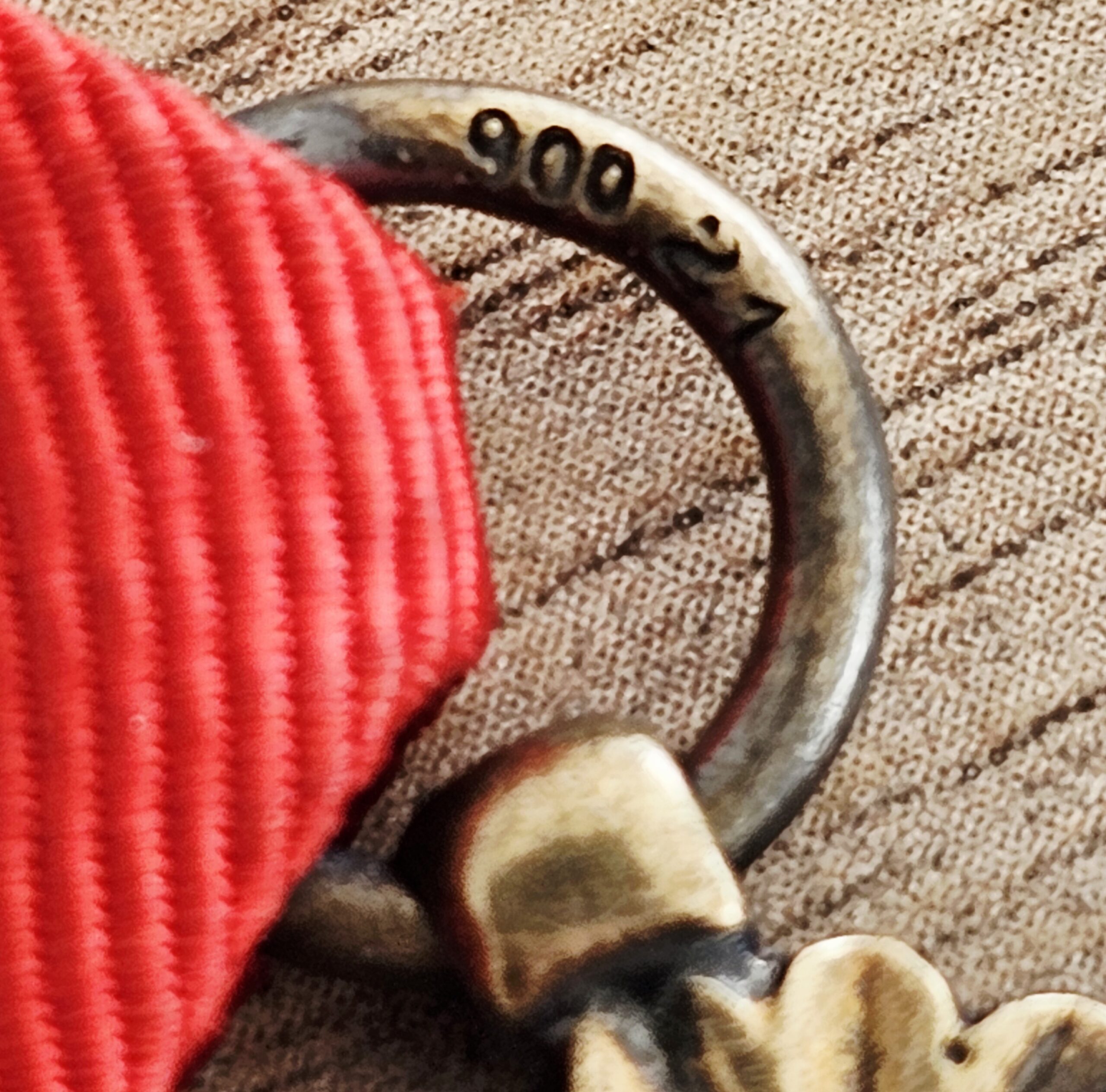
Military Merit Medal (known as Signum Laudis) was originally established in 1890 as an Austro-Hungarian award before evolving into the Kingdom of Hungary’s “Crowned Medal.” During the Hungarian Kingdom Period: Admiral Horthy’s regime (1918–1944) utilized the Hungarian Cross of Merit, which included supplementary military medals of merit awarded for both peacetime service and frontline bravery. Crossed swords indicate military rather than civilian service.
German Ribbon Bar with crossed swords indicating von Emoke had been awarded a German Anschluss Medal for military service.
The German Anschluss Commemorative Medal (German: Die Medaille zur Erinnerung an den 13. März 1938) was a decoration of Third Reich Germany, awarded during the interwar period and the first in a series of Occupation Medals.
Instituted on 1 May 1938, the medal commemorated the annexation of Austria by the German Reich, the so-called Anschluss. German troops crossed the Austrian border on 12 March 1938 without any resistance. The medal, known as the “Anschluss medal”, was awarded to those, both military and civilian, who contributed to or participated in the annexation.
This included German State officials and members of the German Wehrmacht (Military) & Schutzstaffel (SS) who entered Austria. Local sympathisers who had worked for union with Germany also qualified, including the widows of those who had been killed for their cause. Last awarded on 31 December 1940, a total of 318,689 medals were bestowed.
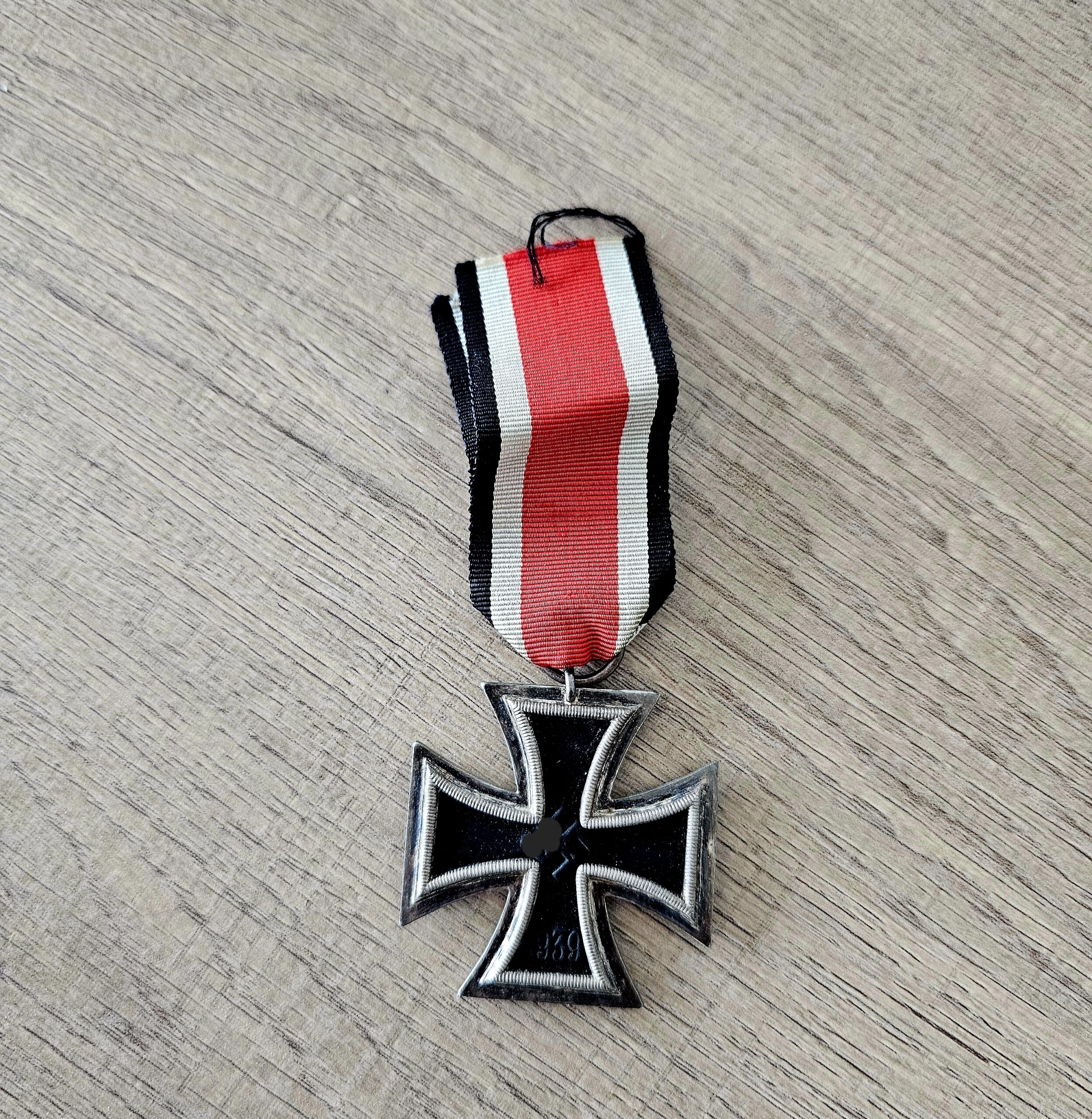
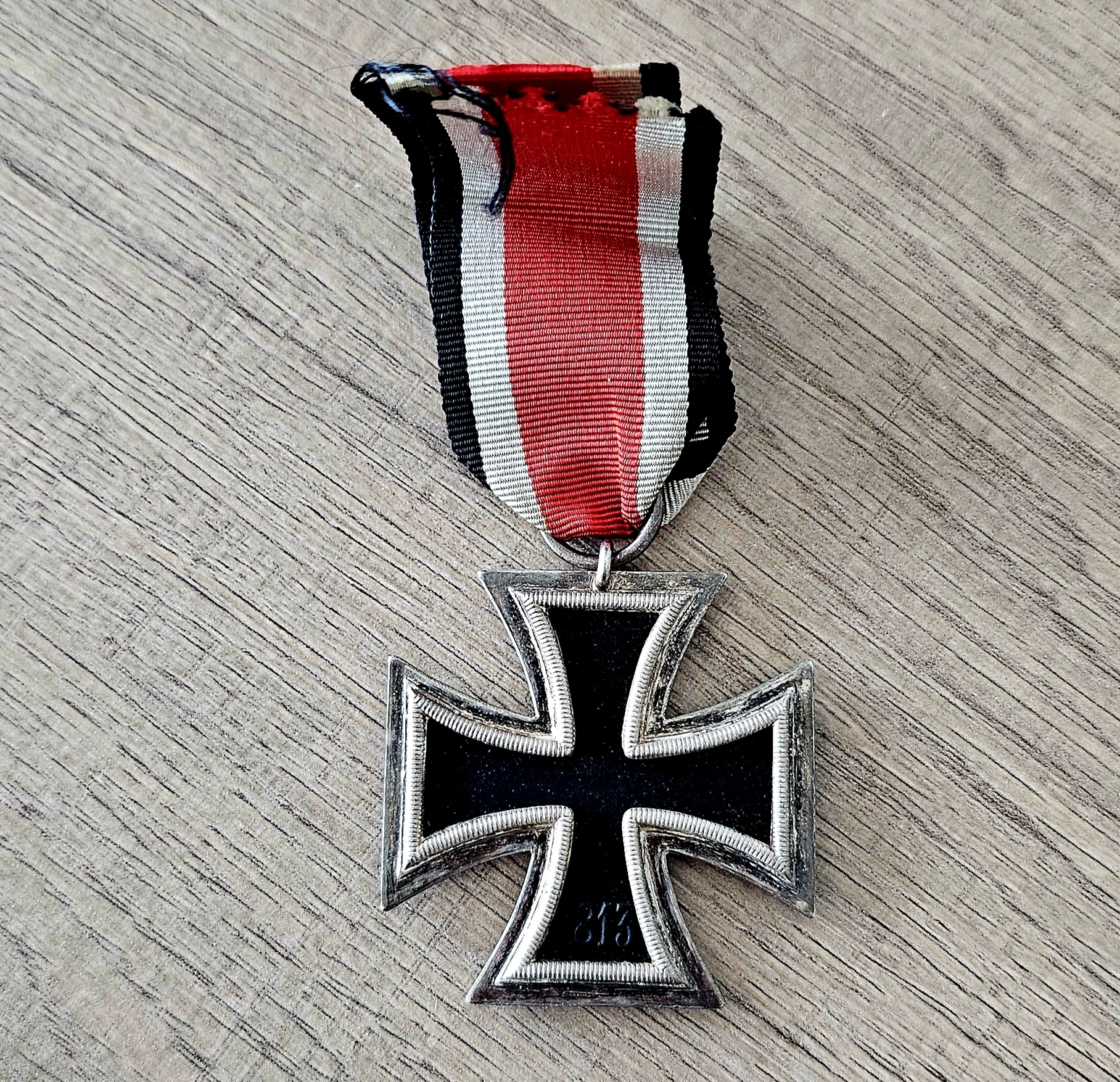
German Iron Cross Second Class
Adolf Hitler restored the Iron Cross in 1939 as a German decoration (rather than Prussian) & continued the tradition of issuing it in various classes. The Iron Cross of World War II was divided into three main series of decorations: the Iron Cross (the lowest), the Knight’s Cross (intermediate), and the Grand Cross (the highest).
The standard 1939 Iron Cross was issued in the following two grades:
Iron Cross, 2nd class, (Eisernes Kreuz 2. Klasse – abbreviated as EK II or E.K.II.)
Iron Cross, 1st class, (Eisernes Kreuz 1. Klasse – abbreviated as EK I or E.K.I.)
The Iron Cross was awarded for bravery in battle as well as other military contributions in a battlefield environment.
It is estimated that some four and a half million 2nd Class Iron Crosses were awarded during World War II, and 300,000 of the 1st Class.
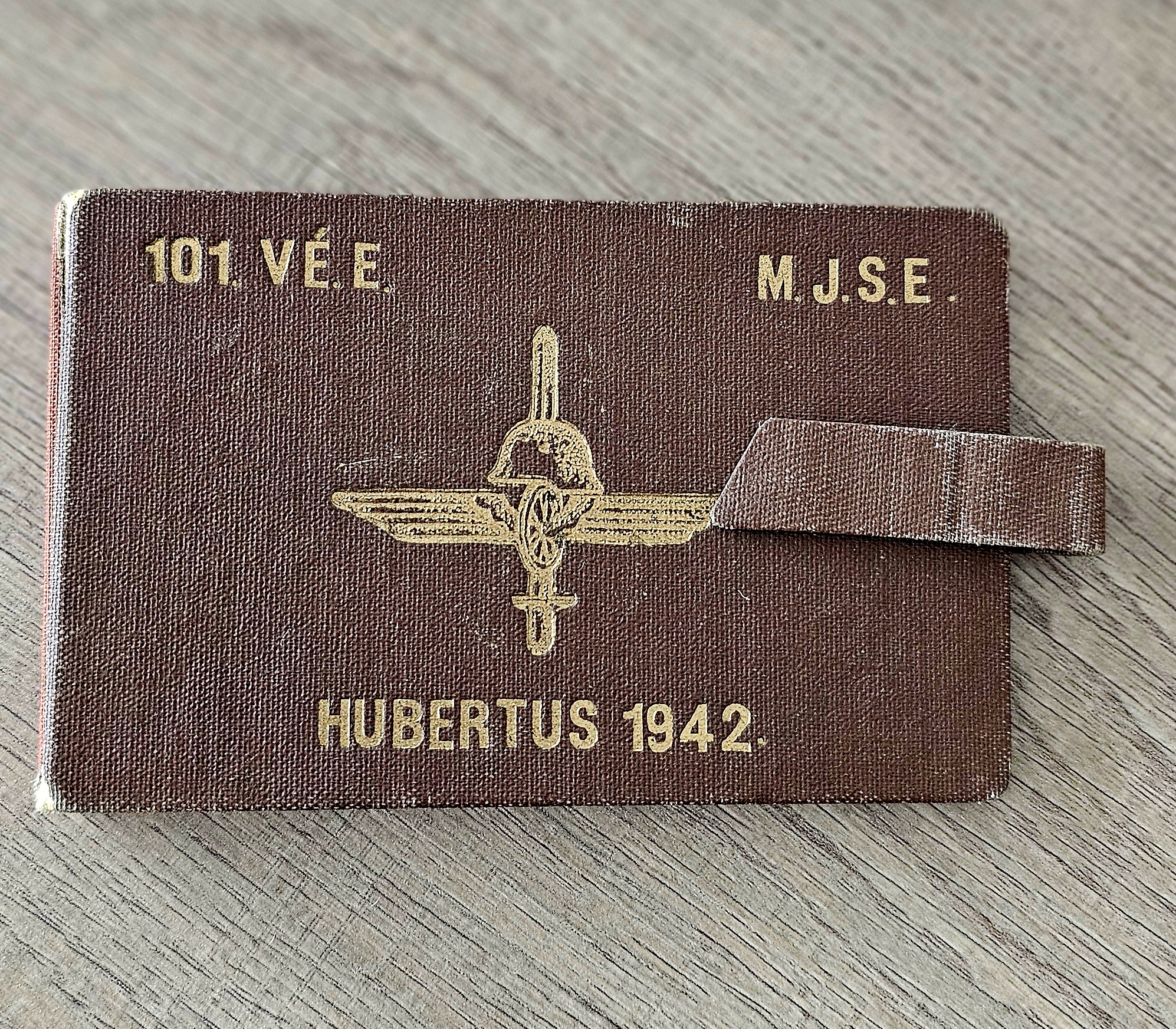
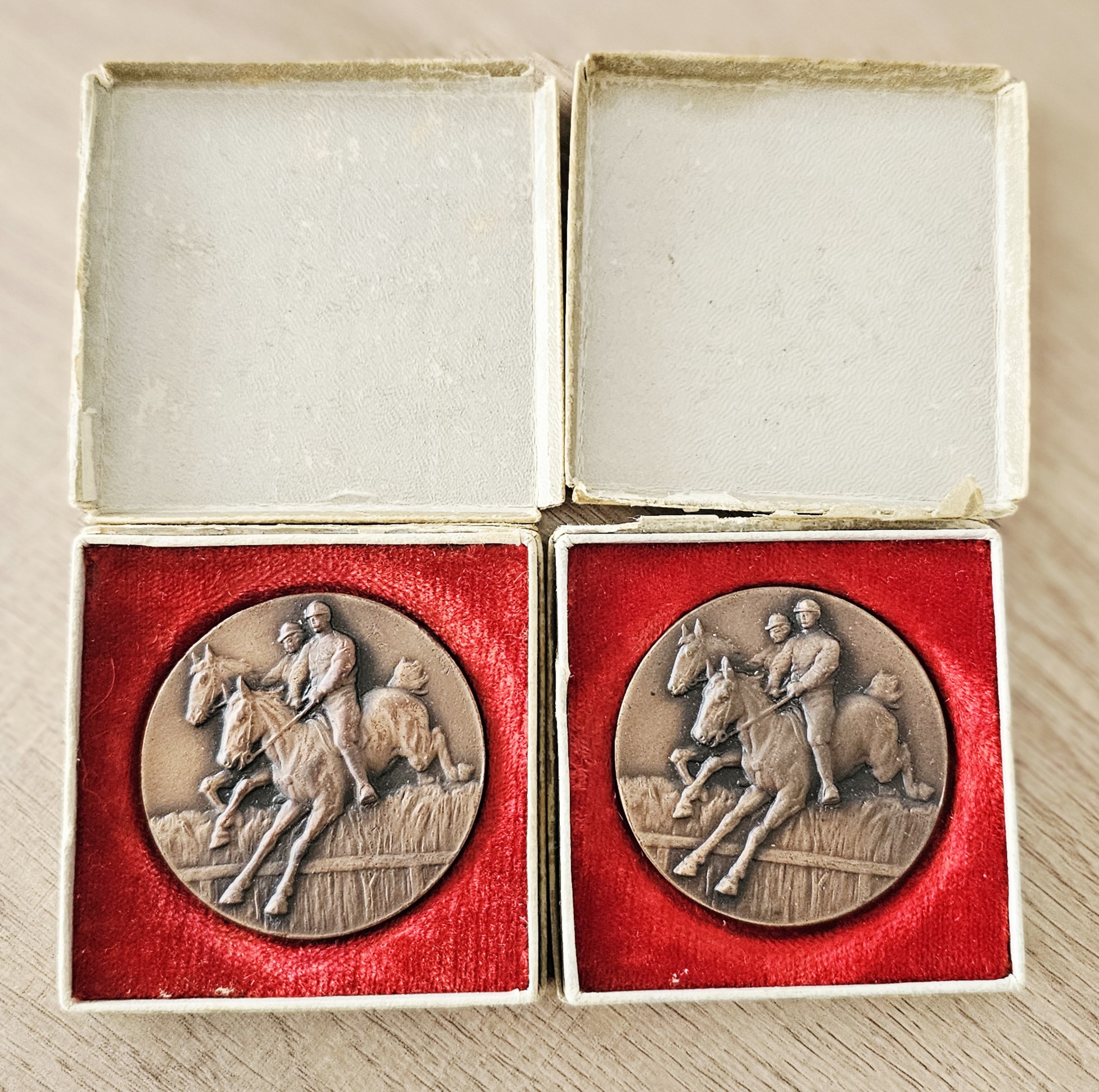
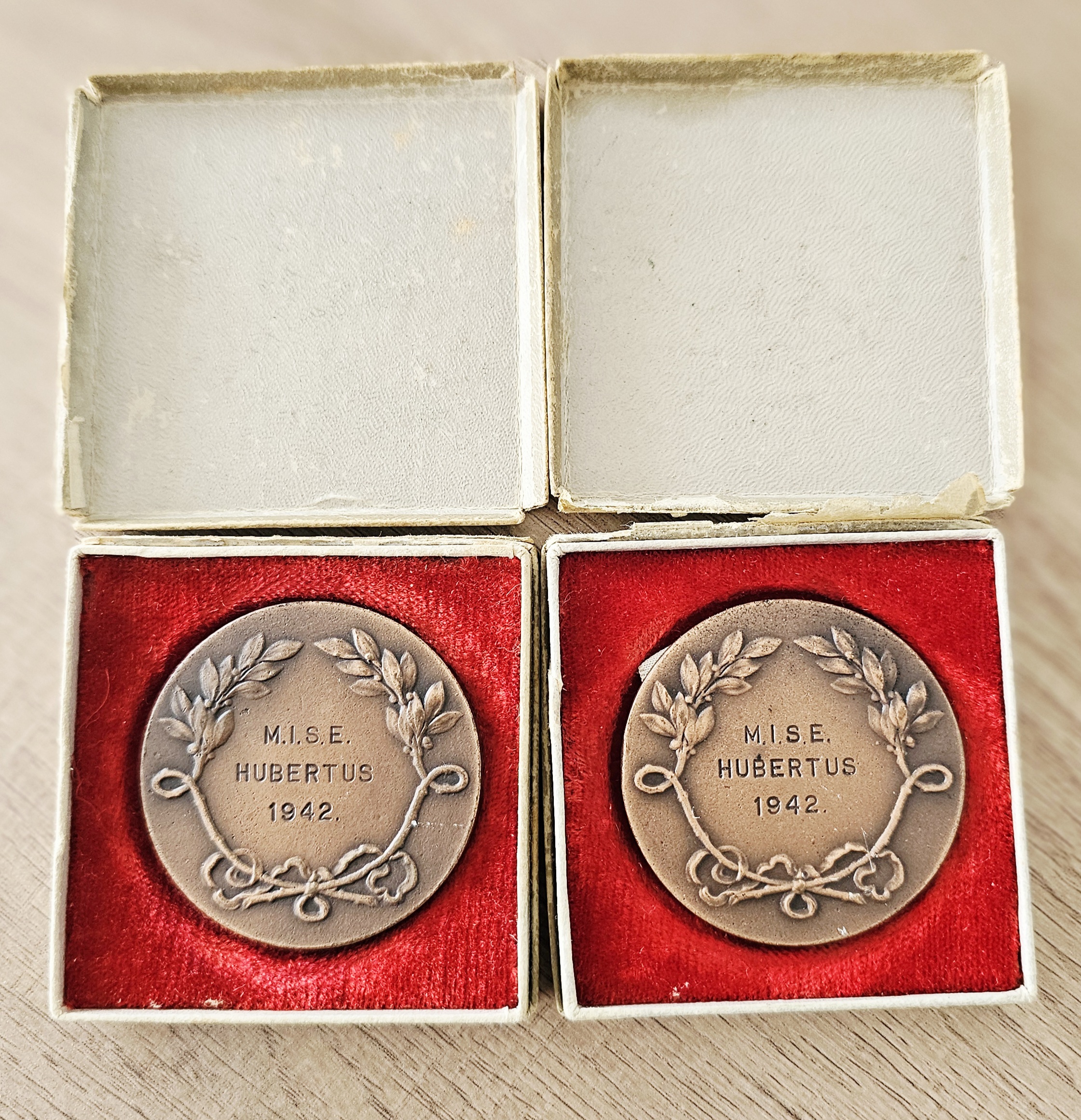
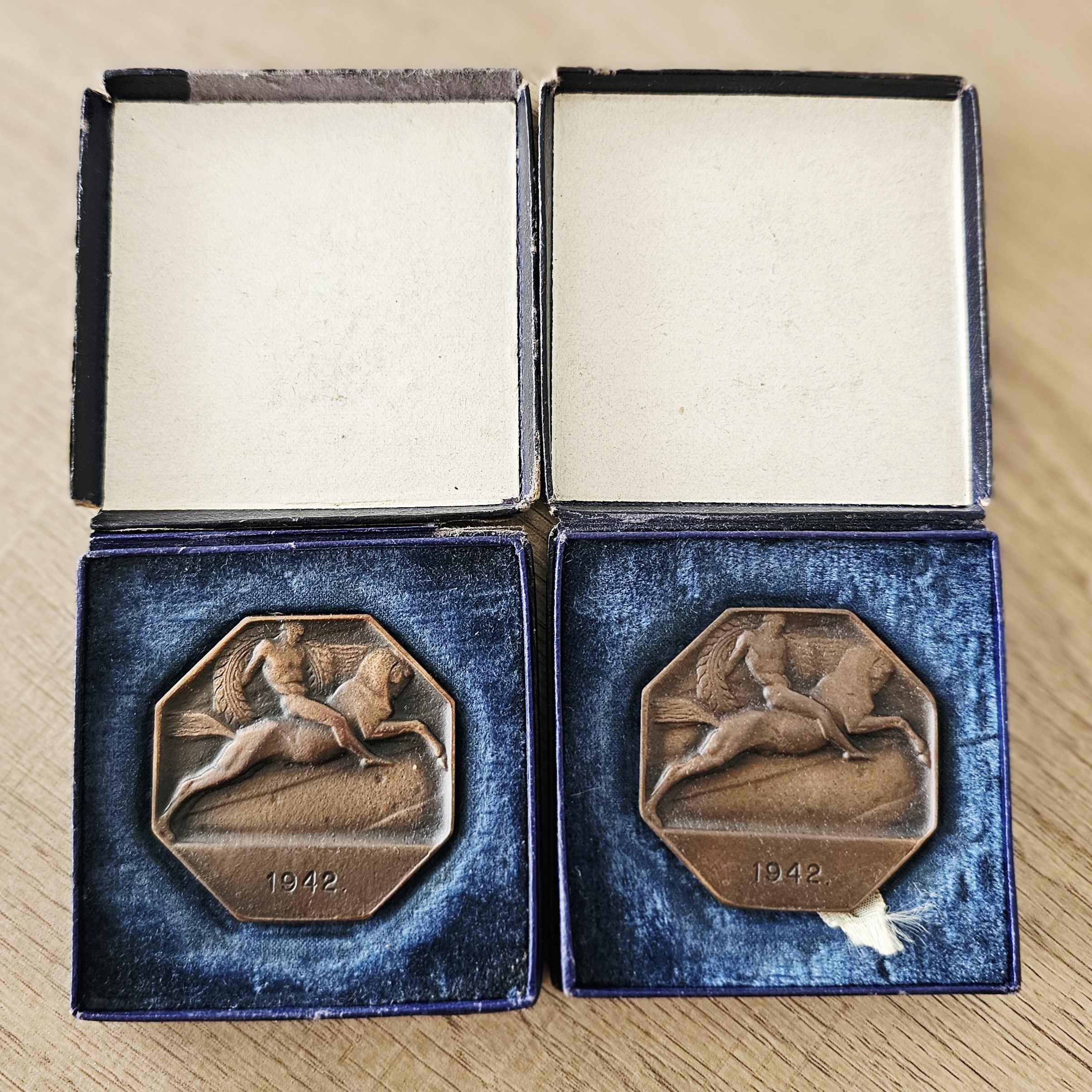
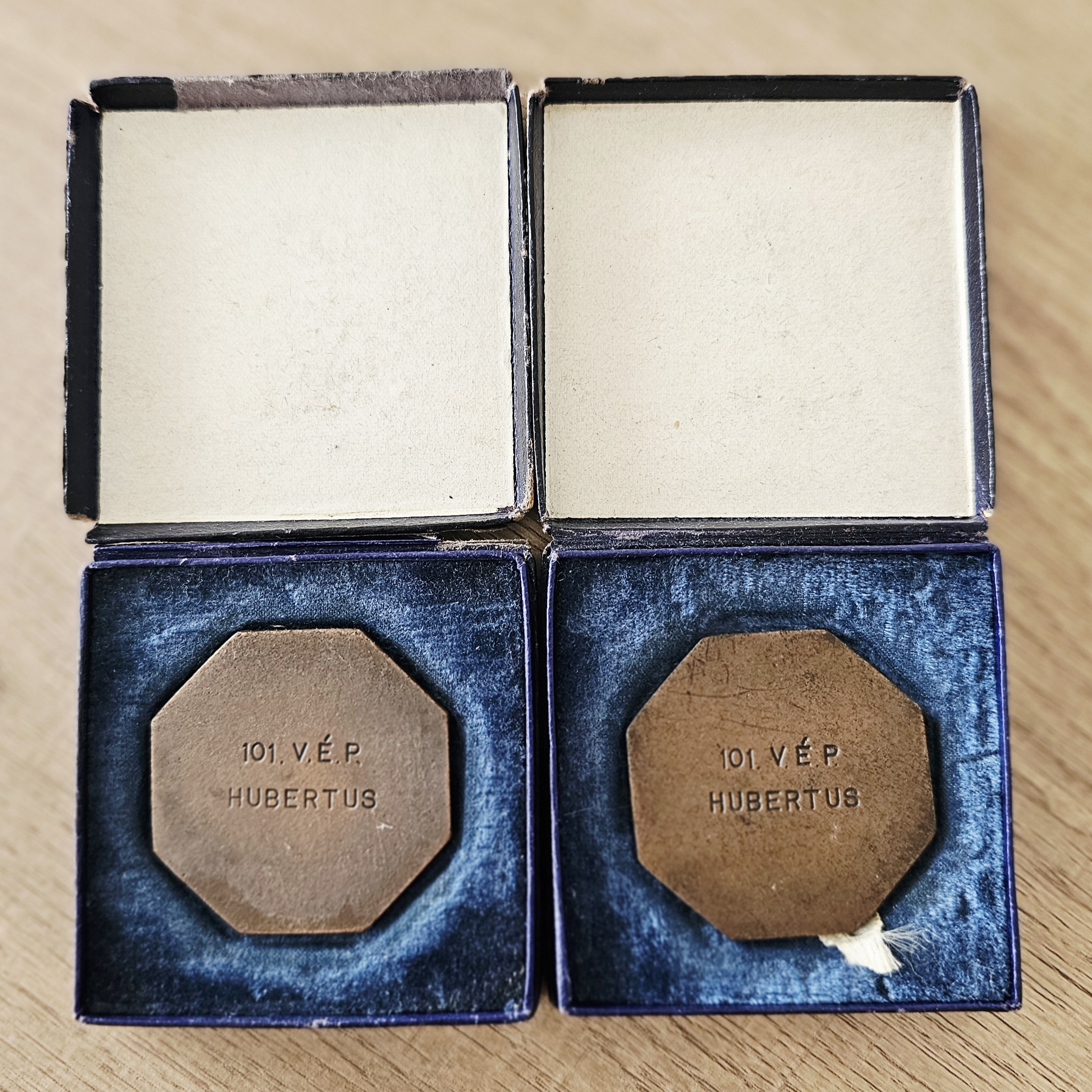
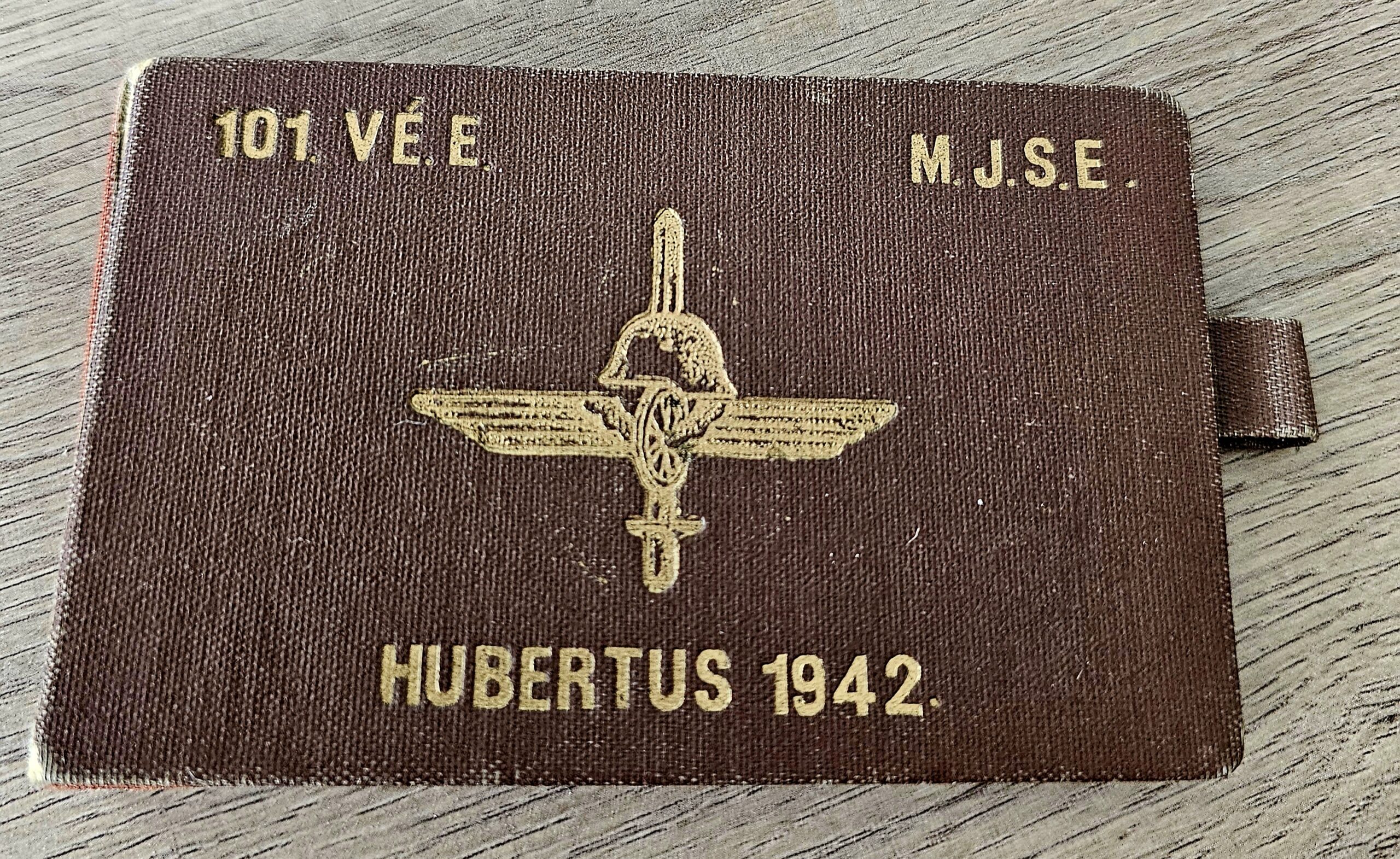
Four Hubertus Medallions dated 1942.
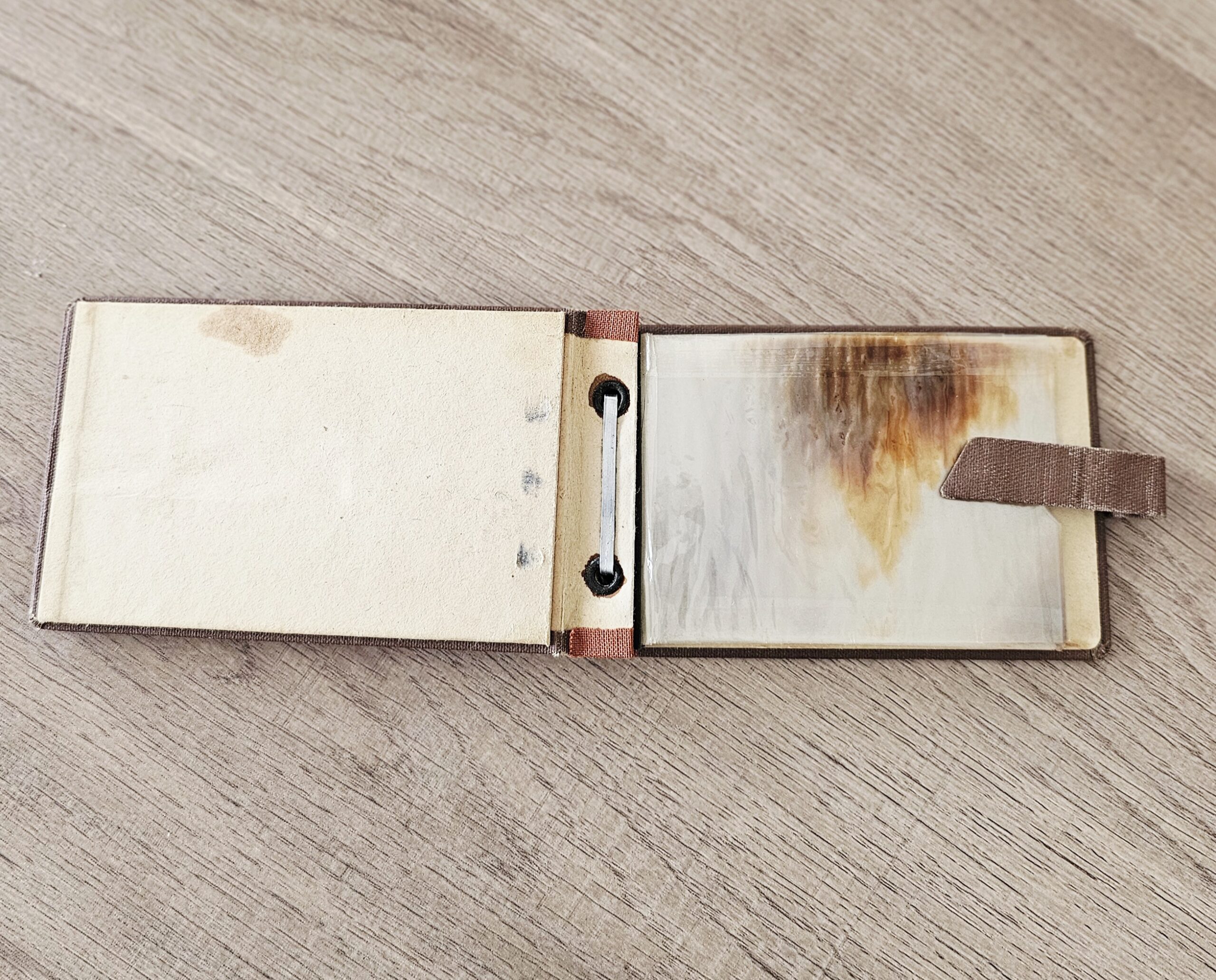
Possible participation in Battle for Stalingrad. Von Emoke was awarded 4 medallions featuring horses with the wording Hubertus 1942. He may have participated in the annual hunt dedicated to Saint Hubertus in 1942 or the medallions more likely are connected to the Battle of Hubertus due to 101 being inscribed into all medallions along with a photo album featuring a transport logo, his embossed initials and the number 101 VE.E & VE.P
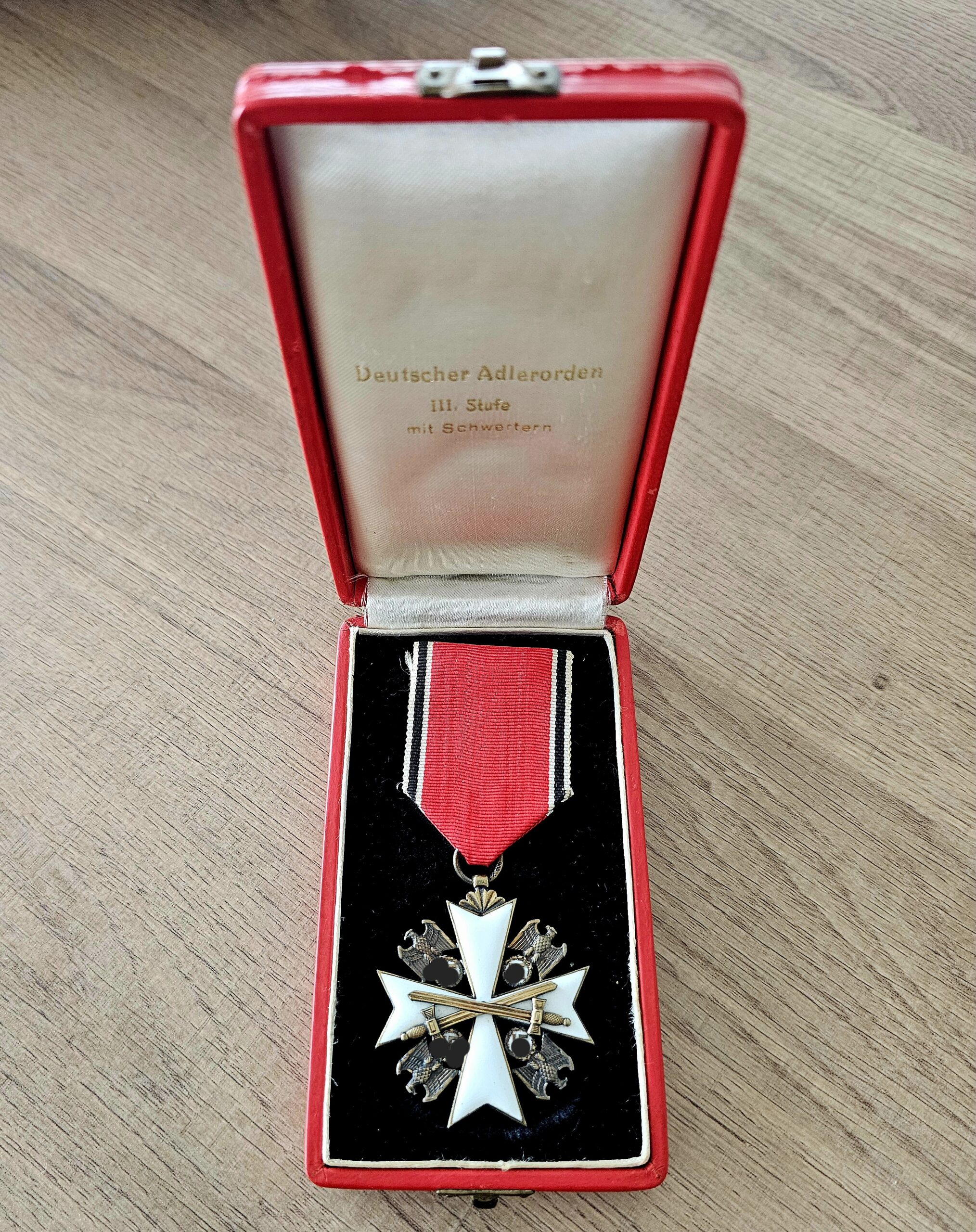
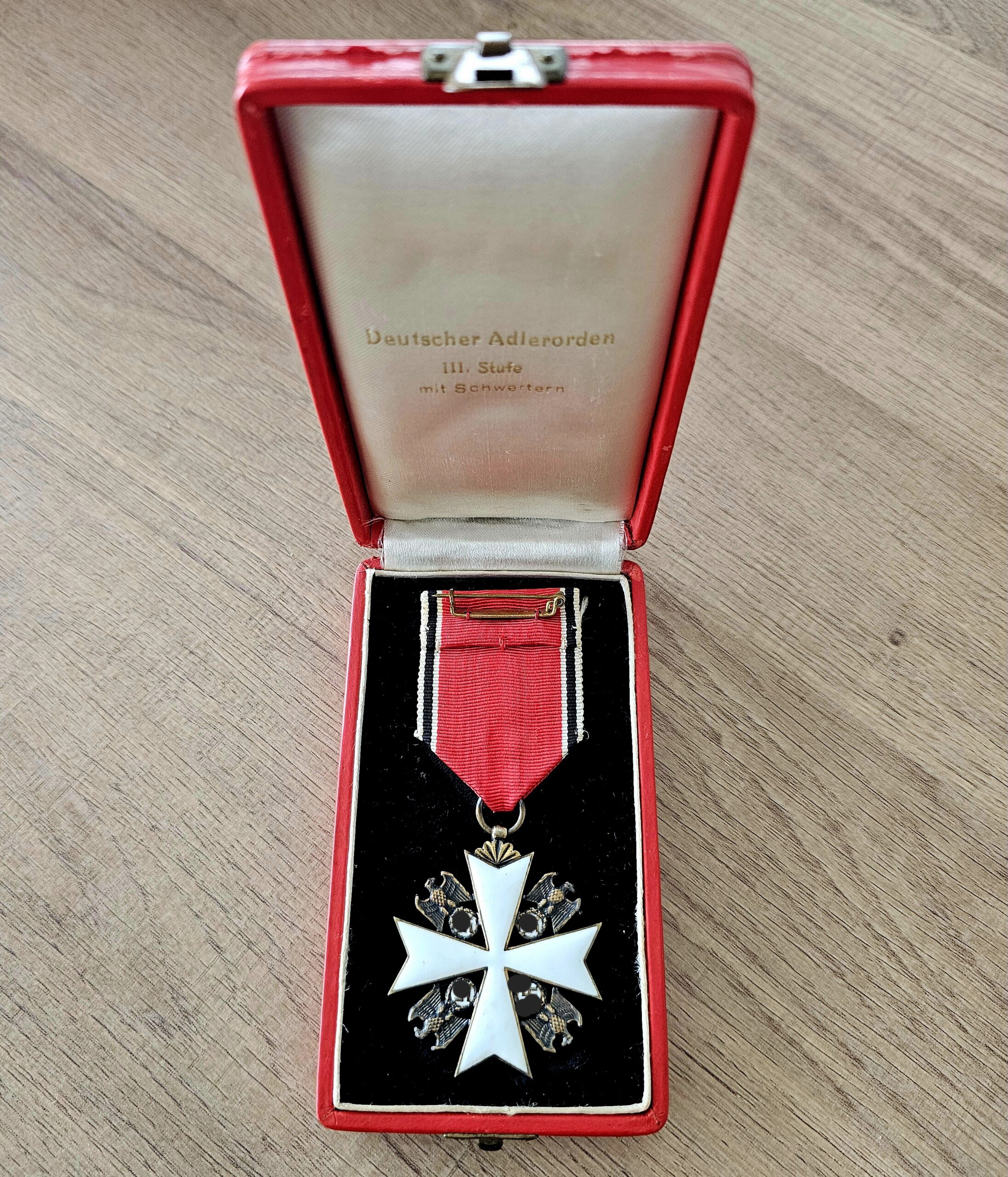
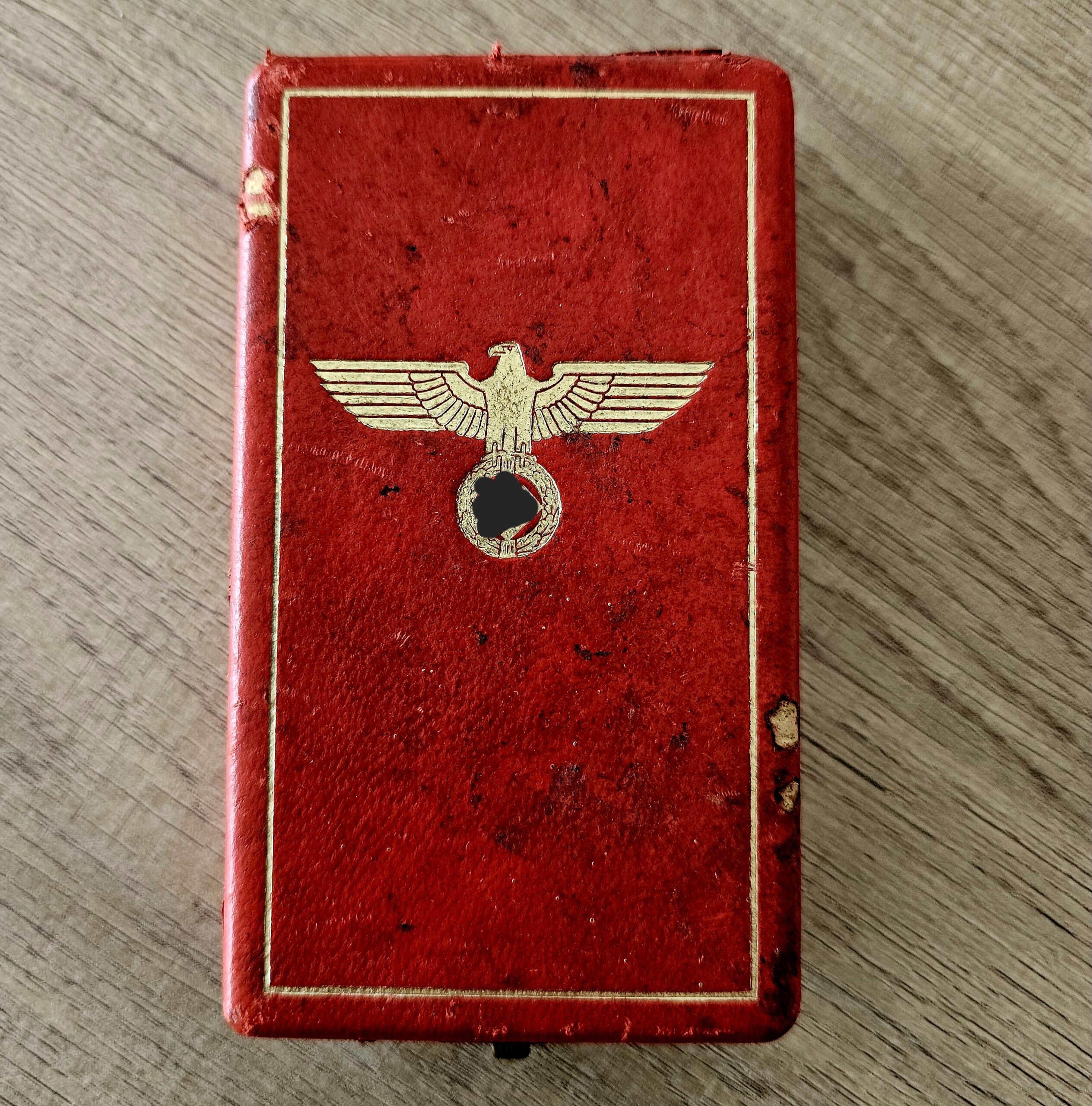
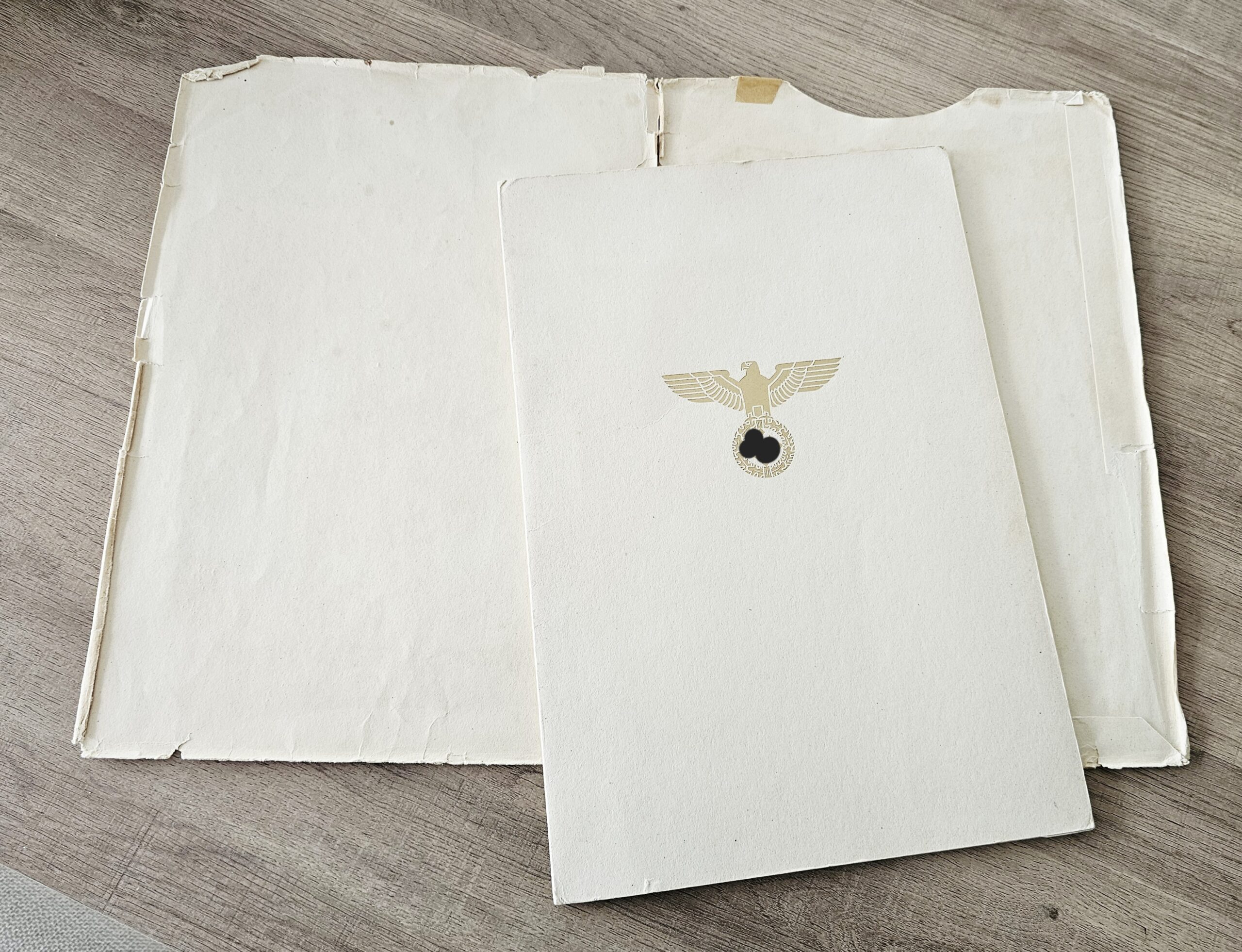
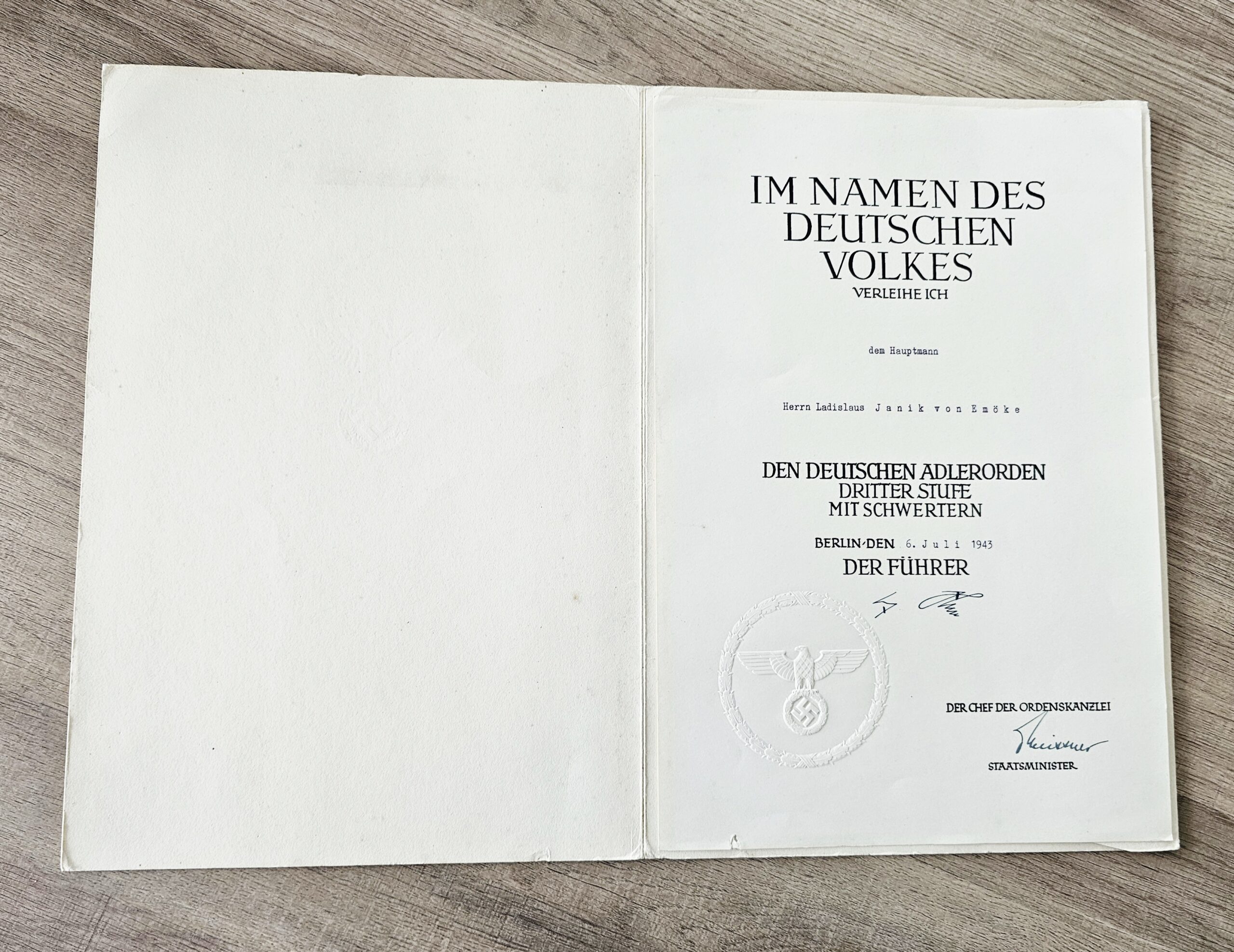
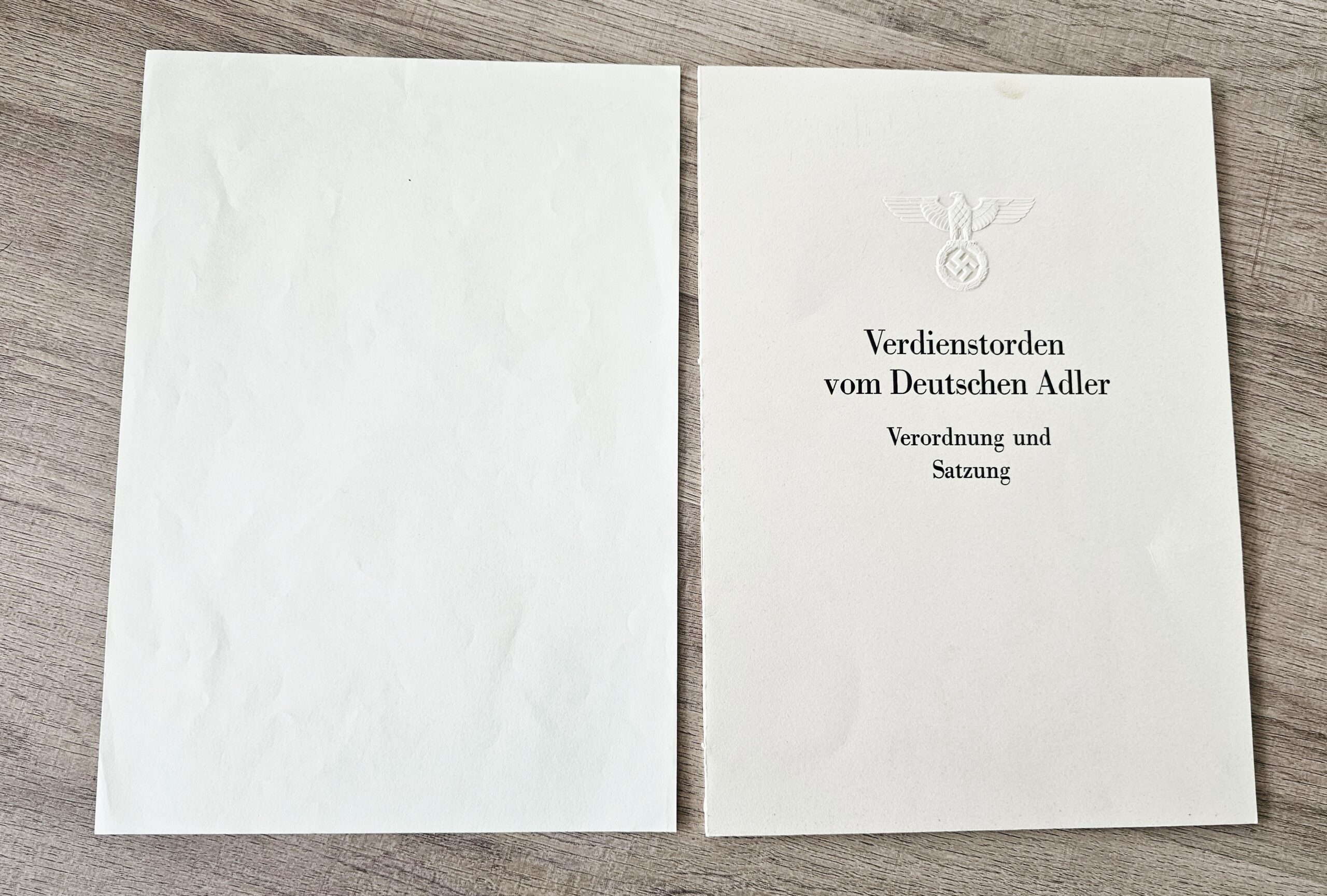
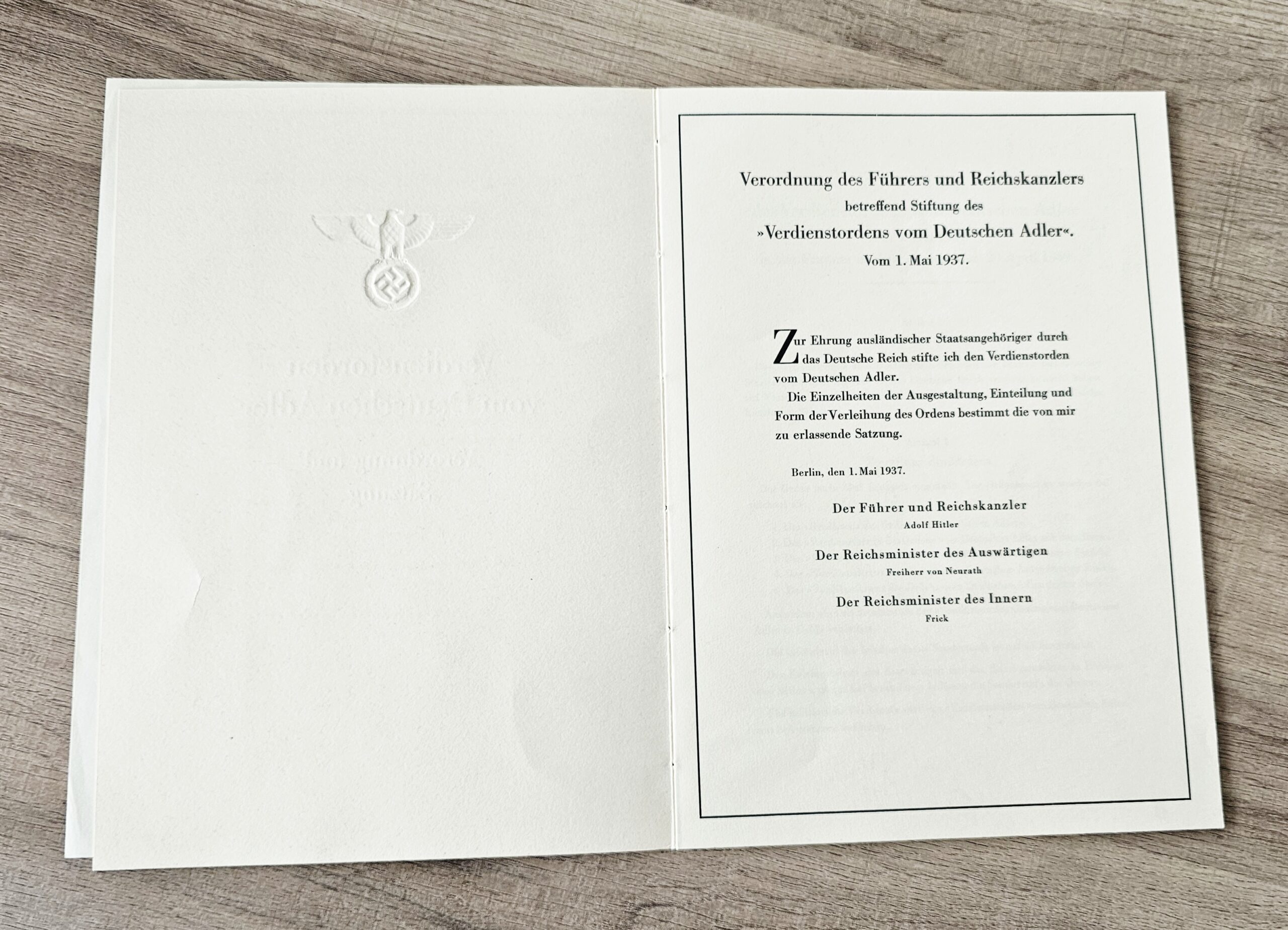
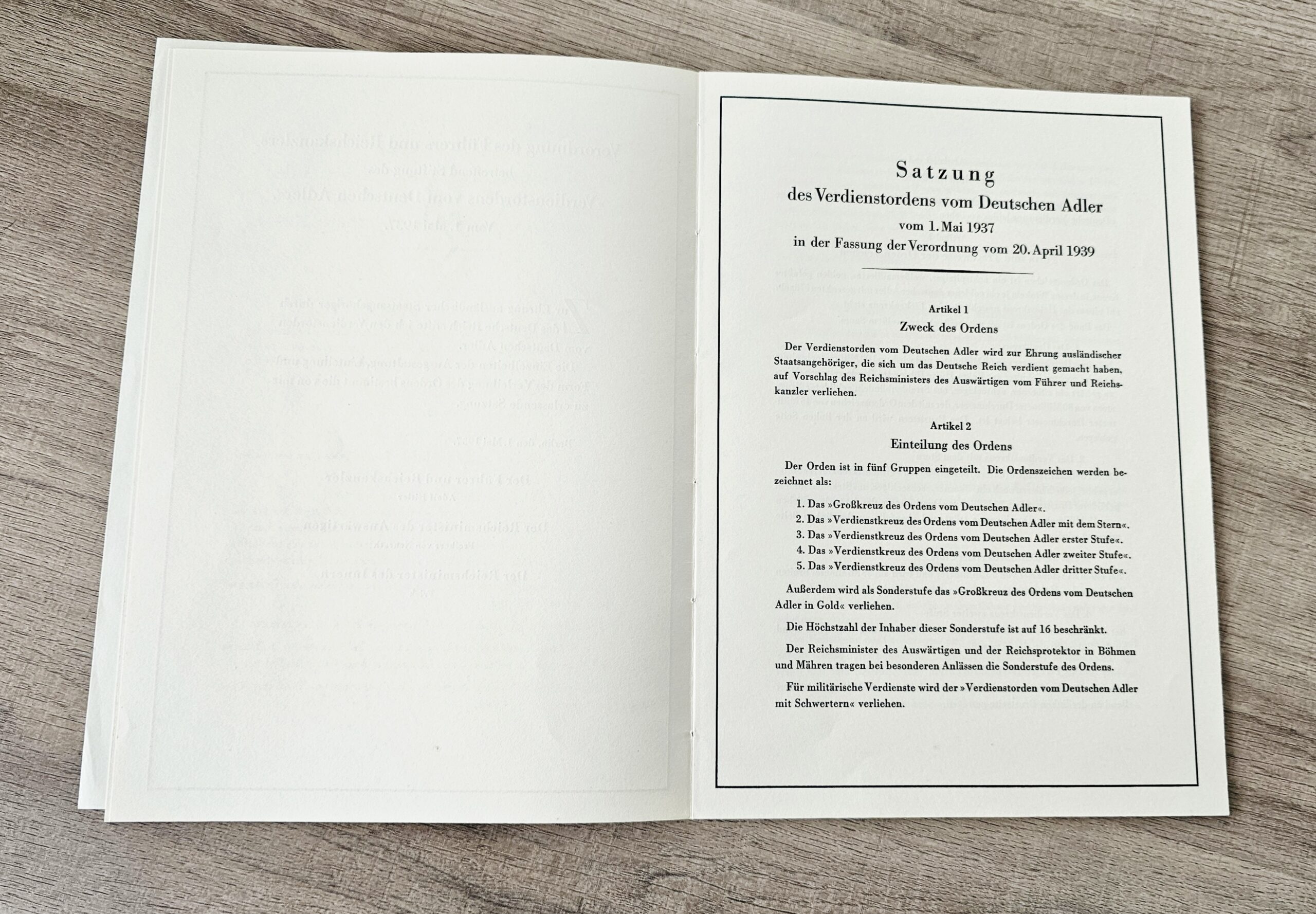
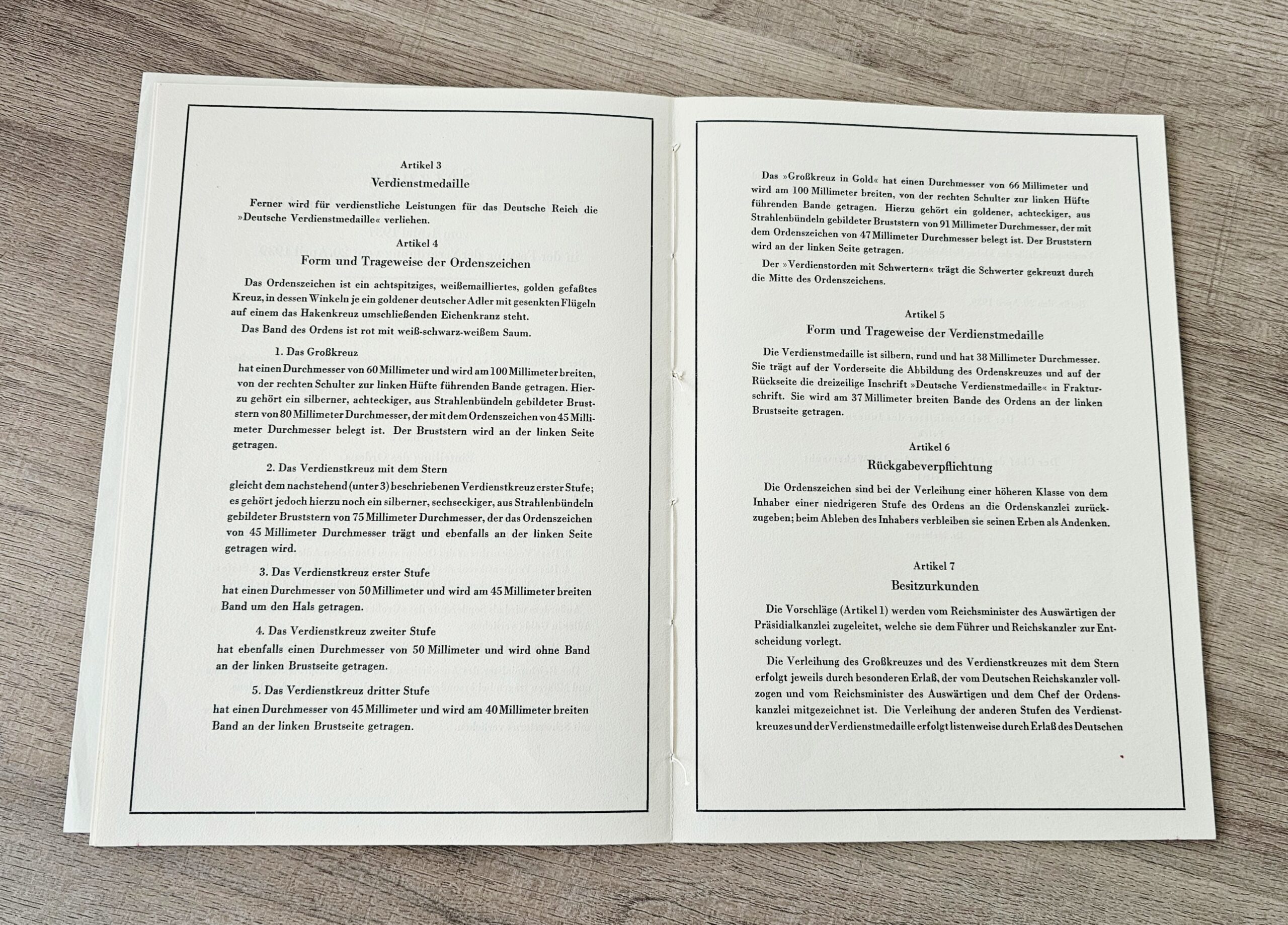
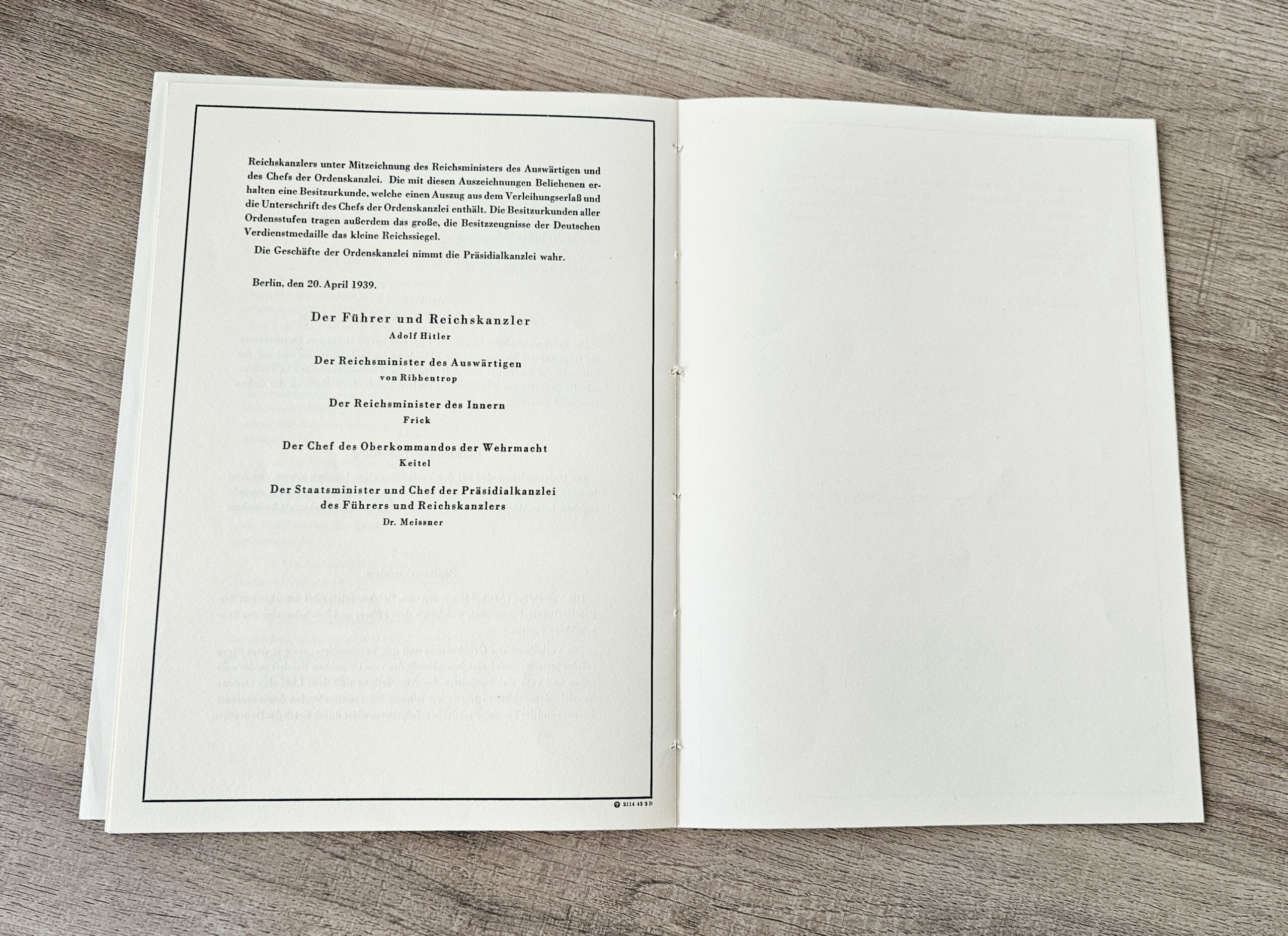
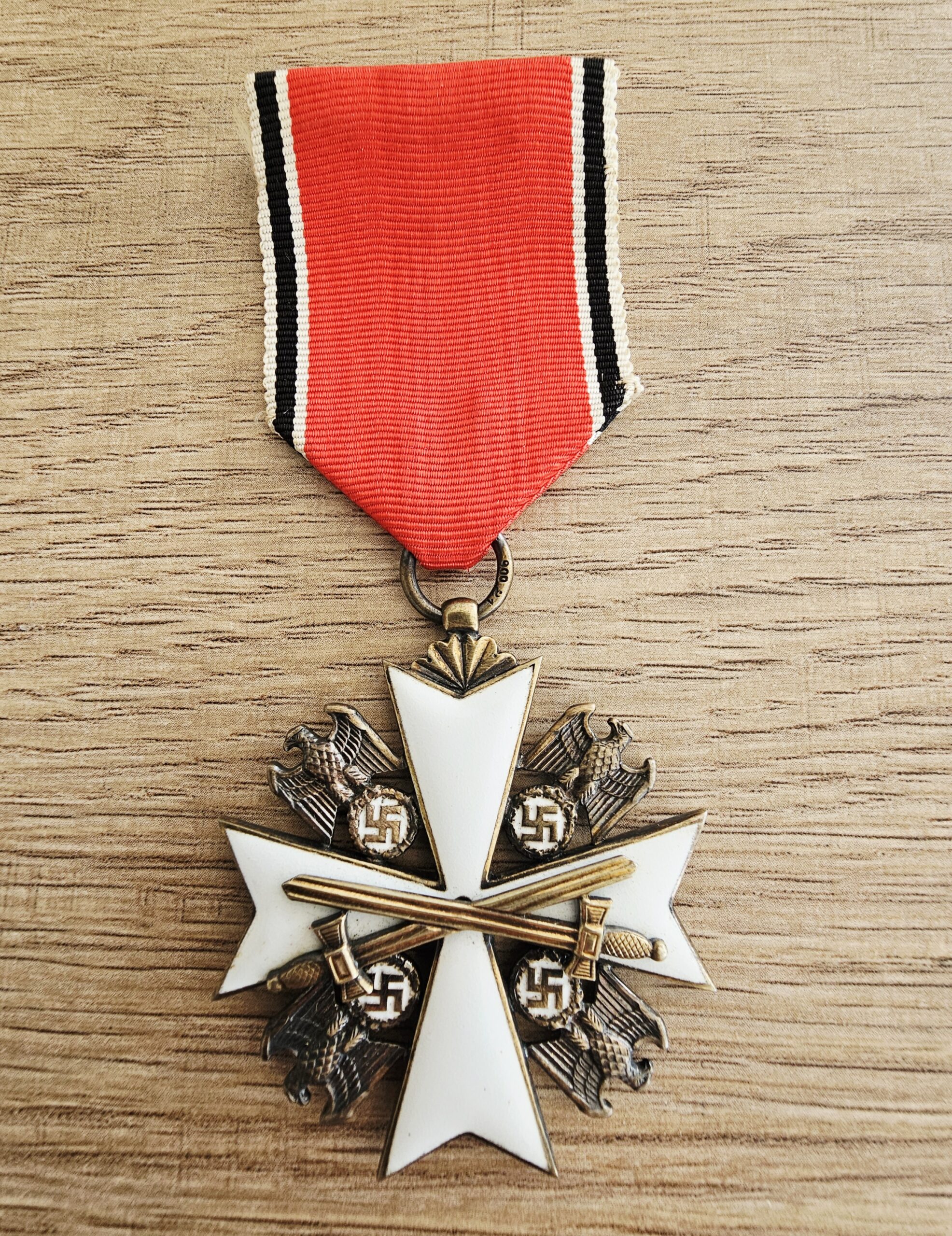
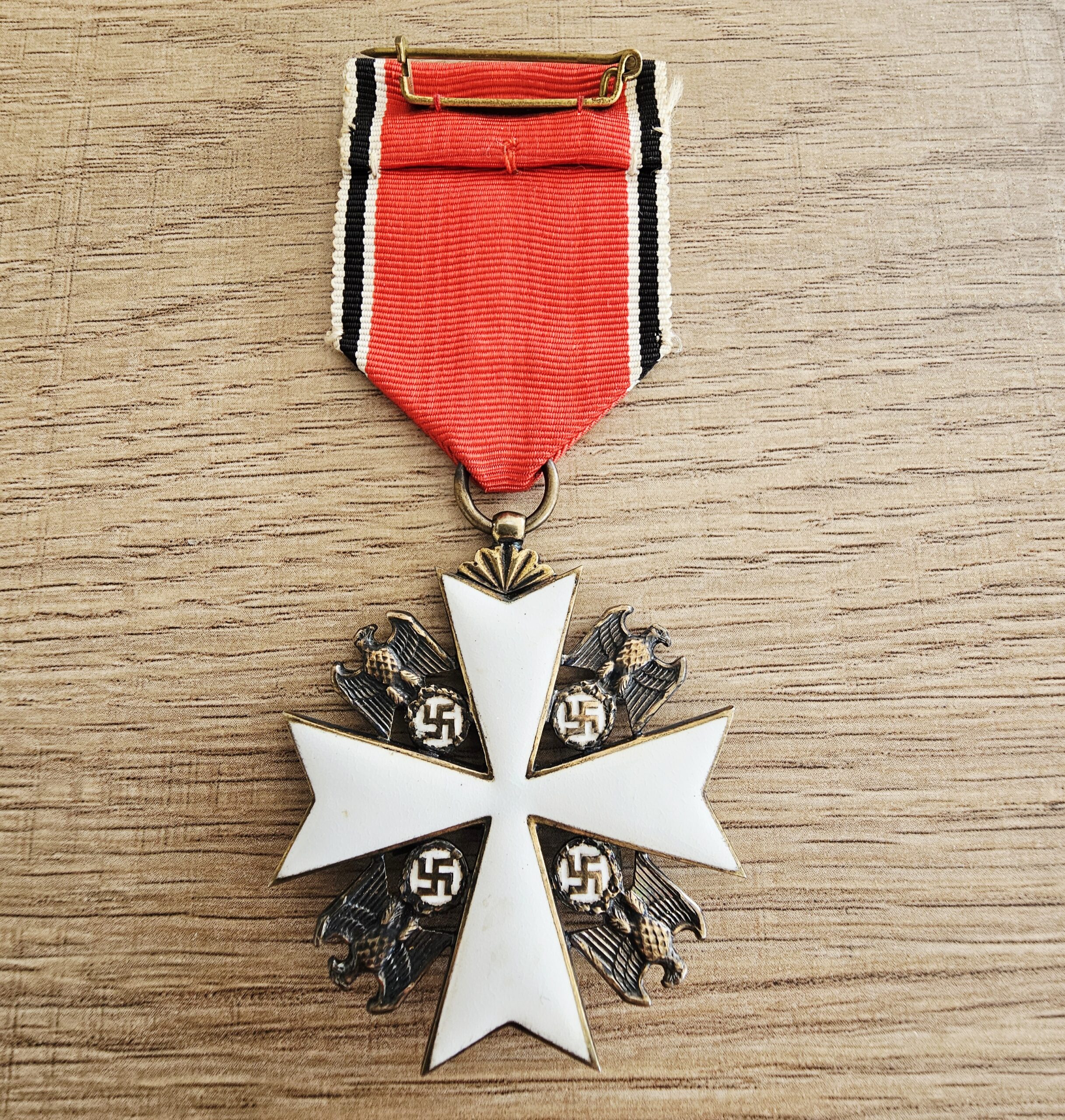
Order of the German Eagle – Third Class Crossed Swords for Military Merit. Awarded to Janik von Emoke on 6th July 1943 with certificate and guideline booklet for owning and wearing the medal in original folder and envelope.
The Order of the German Eagle (Verdienstorden vom Deutschen Adler) was a diplomatic and honorary decoration instituted by Adolf Hitler on 1 May 1937 for the German state, chiefly awarded to prominent foreign nationals, including diplomats who exhibited sympathy toward or rendered services advantageous to the Third Reich’s interests. Comprising initially six classes—from the Grand Cross to the Knight’s Cross—the order featured variants with swords to denote military merit and without for civilian recipients, later expanded to nine classes including merit medals in 1943.
Its highest distinctions, such as the Grand Cross in Gold with Star, were bestowed on key figures like Benito Mussolini shortly after inception and Henry Ford as the first American honouree in 1938, underscoring its function in cultivating international alliances and admiration for Nazi policies.
The order, a tool of Third Reich foreign policy lapsed with the regime’s defeat in 1945, leaving a legacy tied to pre-war German Reich diplomacy and the post-war scrutiny of its recipients’ associations.
Hitler established the Order of the German Eagle (Verdienstorden vom Deutschen Adler) on 1 May 1937 via a personal decree, creating the Third Reich’s principal honorary award for foreign nationals who had provided exceptional service to Germany. This inception filled a gap in the awards system, as traditional Prussian orders—such as the Order of the Red Eagle or House Order of Hohenzollern—had been abolished or restricted after the 1918 monarchy’s fall and were unsuitable for honouring non-Germans in the regime’s expanding diplomatic efforts.
The order’s structure initially comprised six classes: Grand Cross of the Order, Merit Cross with Star, Merit Cross (1st, 2nd, and 3rd classes), and Merit Medal, all without swords to emphasize civilian and diplomatic merit over military valour.
The decree’s timing aligned with Hitler’s consolidation of power and foreign policy manoeuvres, including the remilitarization of the Rhineland in March 1936 and overtures to potential allies amid rising tensions in Europe. By instituting an award exclusively for foreigners—bar rare exceptions for select German officials like Foreign Minister von Ribbontrop —Hitler aimed to incentivize loyalty and cooperation from international figures in politics, industry, and culture who supported German rearmament or ideological alignment with National Socialism.
Early conferrals underscored this intent, with the first major award being a bespoke Grand Cross in gold with diamonds to Italian dictator Benito Mussolini on 25 September 1937, symbolizing the Axis partnership’s nascent strengthening. This creation reflected Hitler’s broader use of symbolic honours to project Reich prestige abroad, distinct from domestic military decorations like the Iron Cross, and served as a tool in pre-war diplomacy without entangling recipients in formal military obligations.
The order’s eagle motif, evoking imperial continuity while incorporating NSDAP swastika elements, underscored the regime’s claim to Germanic tradition adapted for modern expansionism.
The Order of the German Eagle functioned as a key diplomatic instrument in NSDAP foreign diplomacy, designed to honour foreign nationals for services rendered to Germany and to foster sympathy for National Socialism abroad. Instituted on 1 May 1937 at the behest of officials in the Foreign Office, it filled a gap in the German honours system by providing a means to award high distinctions to non-citizens, particularly diplomats and statesmen perceived as aligned with German interests.
Awards were strategically conferred to cultivate bilateral relations, reward economic cooperation, and encourage political neutrality or alignment during the pre-war period of rearmament and territorial revisionism. Recipients typically included ambassadors, foreign ministers, and other elites who facilitated trade agreements, ignored Versailles Treaty violations, or expressed ideological affinity, thereby serving NSDAP goals of isolating adversaries like France and Britain.
In the context of Axis formation, the order reinforced partnerships with Italy and Japan through presentations to their diplomatic representatives, symbolizing shared opposition to the status quo. Reorganizations in 1939 and 1944 introduced variants with swords for military attaches and wartime allies, extending its role to sustain foreign support amid escalating conflict, though its prestige waned as German fortunes declined.
Design & Classification
The insignia of the Order of the German Eagle featured a white-enameled cross pattée with gilded edges, resembling a Maltese cross in form. Positioned between the arms of the cross were gilded Reichsadler eagles, each grasping a swastika in its talons.
For awards conferred on military personnel or in recognition of battlefield merit, two crossed swords were incorporated beneath the cross. The obverse central medallion typically displayed a swastika encircled by a laurel wreath, while the reverse bore the inscription “FÜR VERDIENSTE UM DEUTSCHLAND” (For Merits to Germany).
Higher classes, such as the Grand Cross and Merit Cross with Star, included an breast star: an eight-pointed rayed badge with the cross centred upon it, crafted in silver for lower grades and gold for the Grand Cross. The order’s ribbon was crimson red, measuring approximately 46 mm in width, edged with black-white-red stripes evoking the colours of the German Empire.
Special variants, like the Grand Cross in gold with diamonds awarded to Benito Mussolini on September 25, 1937, incorporated additional precious materials for distinguished recipients. Symbolically, the eagle emblem signified the power and dominion of the German Reich, drawing from longstanding Prussian traditions as seen in orders like the Black Eagle Order, while the swastika integrated National Socialist ideology to underscore loyalty to the regime.
The design aimed to project prestige and diplomatic affinity, imitating imperial chivalric honours to appeal to foreign dignitaries and thereby foster political relations favourable to Third Reich foreign policy objectives.
Classes & Variants
The Order of the German Eagle, instituted on May 1, 1937, originally comprised six classes intended primarily for foreign recipients to recognize diplomatic and friendly contributions to Germany. These included the Grand Cross with star, worn on a sash with a breast star; the Merit Cross 1st Class with star, a neck badge accompanied by a breast star; the Merit Cross 1st Class, a neck badge; the Merit Cross 2nd Class, a chest badge; the Merit Cross 3rd Class, a smaller chest badge; and the Silver Medal of Merit, for lower-level recognition.
Certain classes featured variants with crossed swords to denote military merit, introduced as early as 1939 for recipients involved in wartime cooperation or service aligned with German interests; swords were typically added to the 2nd, 3rd Class crosses, and the merit medal. On December 27, 1943, the order underwent reorganization to expand its hierachy and accommodate broader awards during wartime, increasing to nine classes while renaming some for clarity and adding lower tiers. The revised structure was as follows:
| Class | Description |
| Grand Cross in Gold with Star | Highest special class, sash with large gold breast star; rare. diplomatic or allied leaders. |
| Grand Cross with Star | Sash with breast star; for high-ranking foreign dignitaries. |
| 1st Class | Neck badge with breast star. |
| 2nd Class | Neck badge. |
| 3rd Class | Chest badge. |
| 4th Class | Chest badge. |
| 5th Class | Smaller chest badge, often with swords variant for military. |
| Silver Medal of Merit | Struck silver medal, with swords variant available. |
| Bronze Medal of Merit | Struck bronze medal, for lesser contributions. |
The 1943 variants retained swords for military contexts, applied to classes such as the 5th Class cross and merit medals to differentiate combat-related awards from civilian ones, reflecting the order’s adaptation to Axis alliances and wartime diplomacy. No further structural changes occurred before the regime’s collapse in 1945.
Eligibility for Foreign Recipients
The Order of the German Eagle was instituted exclusively for non-German nationals, serving as Nazi Germany’s primary diplomatic honour for foreigners deemed to have rendered exceptional services to the Reich. Established by Adolf Hitler on 1 May 1937, eligibility focused on contributions that advanced German interests, such as strengthening bilateral relations, promoting economic ties, or supporting political objectives abroad.
Recipients typically included high-ranking diplomats, heads of state, and influential civilians from neutral or allied nations, selected for actions demonstrating loyalty or utility to German foreign policy. For instance, awards recognized facilitation of trade agreements, cultural exchanges, or defence collaborations, with no fixed prerequisites like duration of service or specific rank, allowing discretionary application by the regime.
The order’s statutes emphasized merit in fostering goodwill towards Germany, often extending to non-official figures like industrial leaders who aided technological or commercial initiatives. In practice, eligibility excluded German citizens, who were ineligible as the award targeted international recognition. This approach reflected causal intent: using honours to cultivate dependencies among foreign elites, with over 1,000 documented awards by 1945 underscoring its role beyond mere decoration.
Selection Process
The selection of recipients was managed through nominations proposed by the German Foreign Minister, focusing on foreign nationals who had provided services advancing Third Reich Germany’s diplomatic, economic, or cultural interests, such as facilitating trade agreements, ideological sympathy, or cooperation against common adversaries.
Conferral authority ultimately rested with Adolf Hitler the order’s founder and Fuhrer, who approved awards in accordance with the statutes established on May 1, 1937. Higher classes, including the Grand Cross, required his direct endorsement, while lower classes were often delegated to the Foreign Minister for execution, reflecting the order’s diplomatic utility under centralized control.
Awards were formalized through presentation ceremonies, typically at German embassies, in Berlin or during state visits, accompanied by engraved certificates and presentation cases. The process emphasized exclusivity to non-Germans initially, as stipulated in the founding decree published in the Reichsgesetzblatt, to cultivate international alliances without diluting domestic honours.
Notable Recipients – High-Level Diplomatic Awards
The Grand Cross class of the Orde rof the German Eagle was primarily conferred upon high-ranking foreign diplomats and officials to recognize contributions to German foreign relations and to foster alliances. This highest tier, often presented personally by Adolf Hitler, symbolized peak diplomatic affinity and was reserved for figures such as foreign ministers and senior ambassadors whose actions aligned with Third Reich Germany’s expansionist objectives.
A notable instance occurred on 25 September 1937, when Italian leader Benito Mussolini received a unique Grand Cross in gold with diamonds, marking an early gesture of Axis solidarity shortly after the order’s institution. Similarly, on 22 May 1939, Hitler awarded the Grand Cross to Galeazzo Ciano, Italy’s Foreign Minister and Mussolini’s son-in-law, immediately following the signing of the Pact of Steel, which formalized the military alliance between Germany and Italy. This presentation highlighted the order’s role in cementing bilateral ties amid preparations for war.
In 1941, Japanese Ambassador to GermanyHiroshi Ōshima was presented with the Grand Cross in gold by Hitler, reflecting strengthened Axis coordination as Japan aligned more closely with Germany against common adversaries. Such awards to diplomatic envoys underscored the order’s utility in power and propaganda, portraying recipients as esteemed partners in the Reich vision of international order though post-war repudiations often viewed them as complicit in aggressive expansionism.
Awards to Industrialists and Aviators
Henry Ford, the American automobile manufacturer and founder of the Ford Motor Company received the Grand Cross of the Order of the German Eagle—the highest class of the award—on July 30, 1938, during a ceremony in Dearborn Michigan, marking his 75th birthday. The presentation was made by German consular officials on behalf of Hitler, recognizing Ford’s innovations in assembly-line production, which had influenced German industry, as well as his earlier publications promoting antisemitic views that aligned with NSDAP ideology.
Ford’s acceptance of the award reflected ongoing business ties between Ford-Werke, the German subsidiary of his company, and the NSDAP regime, which utilized Ford’s manufacturing expertise for military vehicleproduction prior to the war. James D. Mooney, vice president of overseas operations for General Motors, was awarded the Commander’s Cross (Merit Cross First Class) in late 1938 for his role in facilitating transatlantic trade and investment that supported German rearmament efforts through Opel, General Motors German affiliate. Mooney’s advocacy for economic cooperation between American firms and Germany, including technology transfers, positioned him as a key figure in pre-war industrial diplomacy.
The award underscored the NSDAP strategy of cultivating foreign business leaders to bolster economic self-sufficiency and wartime preparedness. Among aviators, American pilot Charles Lindbergh renowned for his 1927 solo transatlantic flight, was conferred the Service Cross of the Order of the German Eagle with Star on October 19, 1938, by Hermann Goring during Lindbergh’s visit to Berlin.
The honour acknowledged Lindbergh’s advancements in aviation technology and his recent tour of German Luftwaffe facilities, where he evaluated aircraft like the Messerschmitt Bf 109, as well as his flight in a Lufthansa Junkers Ju 52 as a gesture of goodwill. Lindbergh’s receipt of the award occurred amid his public expressions of admiration for German aeronautical progress, which he contrasted with perceived weaknesses in American and British air power, though it later fuelled accusations of pro-NSDAP sympathies.
Military and Allied Foreign Recipients
The variants of the Order of the German Eagle bearing crossed swords were designated for foreign military personnel distinguishing them from the non-swords versions primarily reserved for diplomatic or civilian merits. These awards, instituted under the May 1, 1937, decree by Hitler, recognized contributions to German-Allied military cooperation, joint operations, or alignment against common foes, particularly during WWII.
Recipients were typically high-ranking officers from Axis partners like Japan, Italy, Romania & Finland, where the honour facilitated operational coordination on fronts such as the Eastern Front and Pacific theater. Japanese Admiral Isoroku Yamamoto, commander of the Combined Fleet, received the Grand Cross on February 9, 1940, for advancing Germany-Japan naval collaboration amid the Anti-Comintern Pact and Tripartite Alliance frameworks.
Similarly, Japanese General Tomoyuki Yamashita, known for conquests in Southeast Asia, was awarded the 1st Class Knight in acknowledgment of his forces’ alignment with Axis strategic goals. In Romania General Ion Antonescu, serving as Chief of the General Staff before assuming leadership, obtained the Grand Cross in Gold, reflecting Romania’s 1940 entry into the Axis and subsequent dispatch of troops for Operation Barbarossa.
Italian Lieutenant General Edoardo Quarra Sito earned the Merit Cross with Star and Swords on December 22, 1941, via a decree countersigned by Otto Meissner, for services likely tied to Italo-German campaigns in North Africa or the Balkans. Finnish General Rudolf Walden, involved in Winter War logistics and later Axis coordination, also held the order, underscoring its role in courting neutral-but-cooperative Nordic states.
Such conferrals, often personally approved by Hitler, numbered fewer than diplomatic awards but emphasized tactical utility, as swords denoted battlefield or command valour supportive of German objectives; post-1943 redesignations to “German Eagle Order” maintained this focus amid escalating war demands.
This selective bestowal—totalling approximately 3,000 recipients by 1945, with higher classes reserved for strategic allies like Japan (12 Grand Crosses)—demonstrated its role in cultivating sympathy and economic ties, particularly with American business leaders such as Henry Ford (Grand Cross, July 30, 1938) and Thomas J. Watson (Eagle Cross, 1937), whose acceptance signalled pragmatic engagement despite underlying ideological alignments.
Recipients typically embraced the honour as a mark of distinction, reflecting its contemporary prestige within diplomatic circles where it bridged ideological divides and incentivized pro-German stances; for instance, Lindbergh publicly acknowledged the award as recognition of aviation advancements, while Ford’s receipt underscored mutual admiration with NSDAP officials.
However, acceptance was not unanimous, with emerging controversies in recipient nations—such as U.S. media scrutiny of Lindbergh’s medal amid rising transatlantic tensions—highlighting limits to its universal appeal, though these did not deter its conferral as a calculated tool for influence.
The order’s utility lay in its exclusivity and symbolism, enabling Germany to reward compliance without formal alliances, as seen in awards to Swedish diplomats like Gunnar Hägglöf (3rd Class, 1940s), which maintained neutrality while extracting concessions.
In practice the order’s diplomatic efficacy stemmed from its adaptability: lower classes for routine goodwill, higher variants with swords for wartime allies, and grand crosses for pivotal figures, thereby reinforcing Germany’s pre-war outreach to isolationists and post-1939 bonds with the Tripartitie Pact signatories.
Post-War Criticisms
Following the unconditional surrender of Germany on May 8, 1945, the Order of the German Eagle was formally abolished as part of the broader denazification efforts, rendering it a relic of the regime’s failed foreign policy initiatives aimed at cultivating international sympathy.
No awards of the Order were documented after the regime’s collapse, as the Foreign Office and chancellery, responsible for its conferral, ceased operations amid the Allied occupation of Berlin and dissolution of the Third Reich. The decoration’s statutory basis, established by Hitler in 1937, inherently tied it to the Reich state’s authority, rendering further grants impossible without a successor entity reviving it—which did not occur. Only around 3,000 were awarded over eight years – a short window in time and history.
Four Hungarian Commemorative Medals Hubertus 1942 and pocket size photo album possibly for Transport Regiment 101 deployed on the Eastern Front. von Emoke’s military records would either confirm or deny his participation in this offensive. Below some details on Hungary’s Participation in the War on the Eastern Front.
Following Hungary’s accession to the Tripartite Pact on November 20, 1940, and its entry into the war against the Soviet Union in June 1941, the Kingdom of Hungary deployed considerable military forces to support the German Wehrmacht. The Royal Hungarian Army (Honvédség) initially provided the Mobile Corps (Gyorshadtest) and later the 2nd Hungarian Army, which were deployed on various front sections.
The year 1942 marked a turning point in Hungarian war participation. In spring 1942, the 2nd Hungarian Army under Colonel General Gusztáv Jány was mobilized and transferred to the Eastern Front. This army comprised approximately 200,000 men and was equipped with numerous support units, including transport regiments that were essential for logistics and supply.
The Role of Transport Regiments
Transport regiments such as Regiment 101 played a crucial role in warfare. They were responsible for transporting troops, ammunition, provisions, medical supplies, and other war-essential goods. On the Eastern Front, with its enormous distances, poor road conditions, and extreme weather conditions, logistics was one of the greatest challenges for all armies involved. Hungarian transport units had to operate under the most difficult conditions. The Russian winter with temperatures of minus 30 degrees Celsius and below, poor infrastructure, and constant partisan threats made every supply convoy a dangerous undertaking.
Operation Hubertus was the final, desperate German offensive in the Battle of Stalingrad, launched on November 11, 1942. Led by General Friedrich Paulus’s 6th Army, the assault relied heavily on specialized combat engineer (pioneer) battalions to clear remaining Soviet pockets near the Volga River. The operation ultimately failed to achieve its goals before the crushing Soviet Operation Uranus counter offensive and Soviet encirclement began on November 19th, 1942.
Christmas 1942 took place at a critical moment. The 2nd Hungarian Army was positioned on the Don sector between Voronezh and Stalingrad. The strategic situation was already precarious: the German 6th Army was encircled at Stalingrad, and Soviet forces were preparing further offensives.
For Hungarian soldiers, far from their homeland, Christmas had special emotional significance. Military leadership and troop welfare services made efforts to provide soldiers with a sense of home and tradition despite adverse circumstances.
Such commemorative medals were not official state decorations but were often commissioned at regimental or divisional level. They served as badges of honour among comrades and were intended to strengthen unit cohesion. For soldiers, they were personal mementos of their service and their comrades.
Only a few weeks after Christmas 1942, on January 12, 1943, the Soviet Ostrogozhsk-Rossosh Offensive began, directed against Hungarian, Italian, and German troops on the Don River. The 2nd Hungarian Army suffered devastating losses. Of the original approximately 200,000 men, fewer than 70,000 returned to their homeland. Transport Regiment 101 shared the fate of the entire army. During 1943 many depleted Hungarian units came under direct German command. 12,000 Hungarians continued to fight throughout 1943 & 1944.